
Received - But by Whom?
The word Kabbalah (קבלה) comes from the Hebrew root q-b-l, meaning "to receive." It names a tradition that understands itself as received - passed down from teacher to student, from mouth to ear, in an unbroken chain reaching back to Sinai, or to Adam, or to the angels themselves, depending on which story you prefer.
But received by whom? And from whom? And toward what end?
These questions matter more than they first appear. Because the word "Kabbalah" now names not one tradition but three - each with its own history, its own texts, its own understanding of what the Tree of Life is for. They share a symbol system the way three languages might share an alphabet. The letters look the same. The words they spell are profoundly different.
The three traditions even spell the name differently, and the spelling is a signal: Kabbalah (Jewish), Cabala (Christian), Qabalah (Hermetic). When you see the spelling, you know the soil.
This article traces those three streams - not to declare one authentic and the others false, but to understand what each one keeps and what each one leaves behind. The Tree of Life is a powerful enough symbol to survive transplantation. But a transplanted tree does not grow the same fruit.
Jewish Kabbalah: The Root Tradition
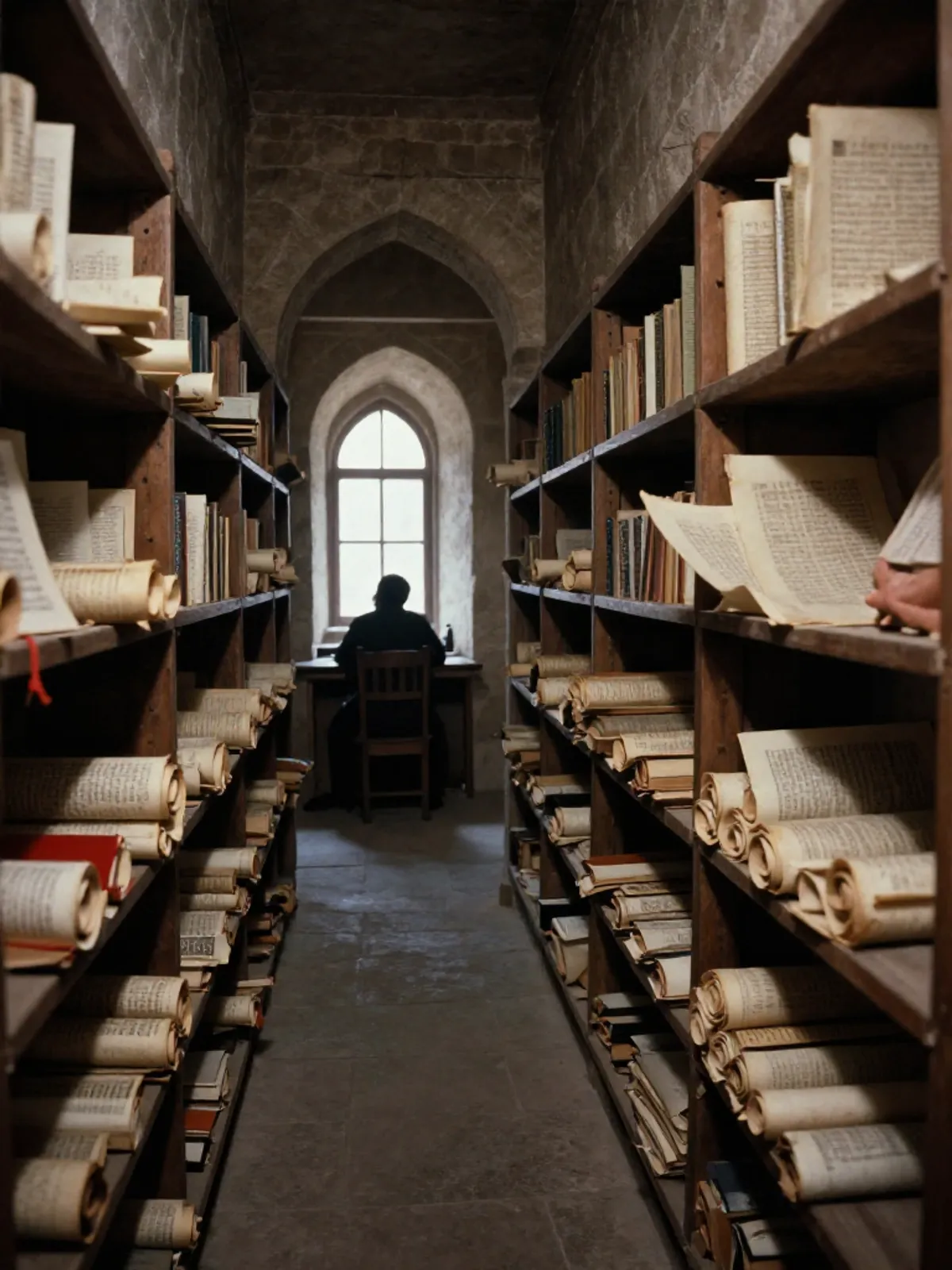
Jewish Kabbalah is not a free-standing system. It is Jewish theology - inseparable from Torah, from halakha (Jewish law), from the rhythms of Shabbat and the liturgical year. It arose within rabbinic Judaism and cannot be fully understood outside it, any more than neidan can be understood apart from the Daodejing. To study Kabbalah in its native context is to study Torah on a particular frequency - one that hears in the commandments not merely law, but the reverberations of a cosmic speech act.
The earliest text in the kabbalistic lineage is the Sefer Yetzirah (ספר יצירה, "Book of Formation"), a terse and enigmatic work dated somewhere between the 2nd and 6th centuries CE. Barely two thousand words long, it describes creation as an act of divine speech - God forming the universe through the twenty-two letters of the Hebrew alphabet and the ten Sefirot, the primal numbers or emanations. The text is more formula than narrative, more incantation than explanation. It reads like the notes of someone who has seen something and is trying to compress it into the fewest possible words.
In the 12th century, the Sefer ha-Bahir (ספר הבהיר, "Book of Brilliance") appeared in Provence, introducing the symbolic imagery that would define later Kabbalah: the Tree of Life as a map of divine attributes, the interplay of masculine and feminine within God, the notion that Torah conceals infinite layers of meaning beneath its literal surface.
Then came the Zohar (זוהר, "Radiance") - the great masterwork of Kabbalah, composed in 13th-century Spain and attributed to the circle of Moses de Leon, though the text itself claims the voice of the 2nd-century sage Rabbi Shimon bar Yochai. The Zohar is a vast, lyrical, sometimes bewildering commentary on the Torah, written in an artificial Aramaic that lends it an archaic grandeur. It is not a systematic treatise. It is more like a conversation overheard between mystics walking through the countryside, interrupting each other with visions. It remains the central text of the kabbalistic tradition, and reading it - even in translation - is an encounter with a mind (or minds) operating at the outer edge of what language can express.
The Torah has a body, a soul, and a soul of the soul. The ordinary narratives are its body. The deeper meanings are its soul. The highest secrets are the soul of the soul.
- Zohar III, 152a
The ten Sephirot - from Kether (Crown) to Malkuth (Kingdom) - are not gods, not angels, not abstractions. They are the stages by which the infinite, unknowable Ein Sof (אין סוף, "Without End") pours itself into creation. They describe the inner life of God as it becomes available to human contemplation.
This is a critical point: Jewish Kabbalah is monotheistic to its core. The Sephirot are not separate beings. They are aspects of the One - the way sunlight through a prism becomes visible as distinct colors without ceasing to be light.
It is also worth noting what Gershom Scholem accomplished in the 20th century. Before Scholem, academic scholarship largely dismissed Kabbalah as medieval superstition - an embarrassing remnant of pre-modern irrationality, best left to folklorists. His monumental Major Trends in Jewish Mysticism (1941) changed everything. Scholem demonstrated that Kabbalah was a sophisticated, historically situated theological movement with its own rigorous internal logic - and restored it to serious intellectual consideration. His student Moshe Idel would later challenge some of Scholem's conclusions, but the field itself exists because Scholem created it. Much of what we can say about Kabbalah's history, we can say because Scholem said it first.
One more thing must be said plainly: Jewish Kabbalah was never meant to be universal. It presupposes Torah literacy, familiarity with rabbinic discourse, and immersion in Jewish religious life. The traditional requirement - that a student be a married Jewish man over forty, well-versed in Talmud - was not arbitrary gatekeeping. It was a recognition that this knowledge is dangerous without the container of practice and community to hold it.
The Talmud tells a cautionary tale: four sages entered Pardes (the "orchard" - a metaphor for mystical contemplation). One died, one went mad, one became a heretic. Only Rabbi Akiva "entered in peace and departed in peace." The story is a warning, embedded in the tradition's own literature, that these practices require preparation, maturity, and grounding. Not everyone who approaches the orchard is ready to enter.
After the expulsion from Spain in 1492, Kabbalah found a new center in Safed (Tzfat), in the Galilee. There, Isaac Luria - known as the Ari ("the Lion") - developed the most influential kabbalistic theology since the Zohar. Lurianic Kabbalah introduced the concepts of tzimtzum (divine contraction), shevirat ha-kelim (the shattering of the vessels), and tikkun (repair). These ideas would reshape Jewish theology for centuries - and, through many intermediaries, would eventually reach the other two traditions as well.
Christian Cabala: The Renaissance Translation
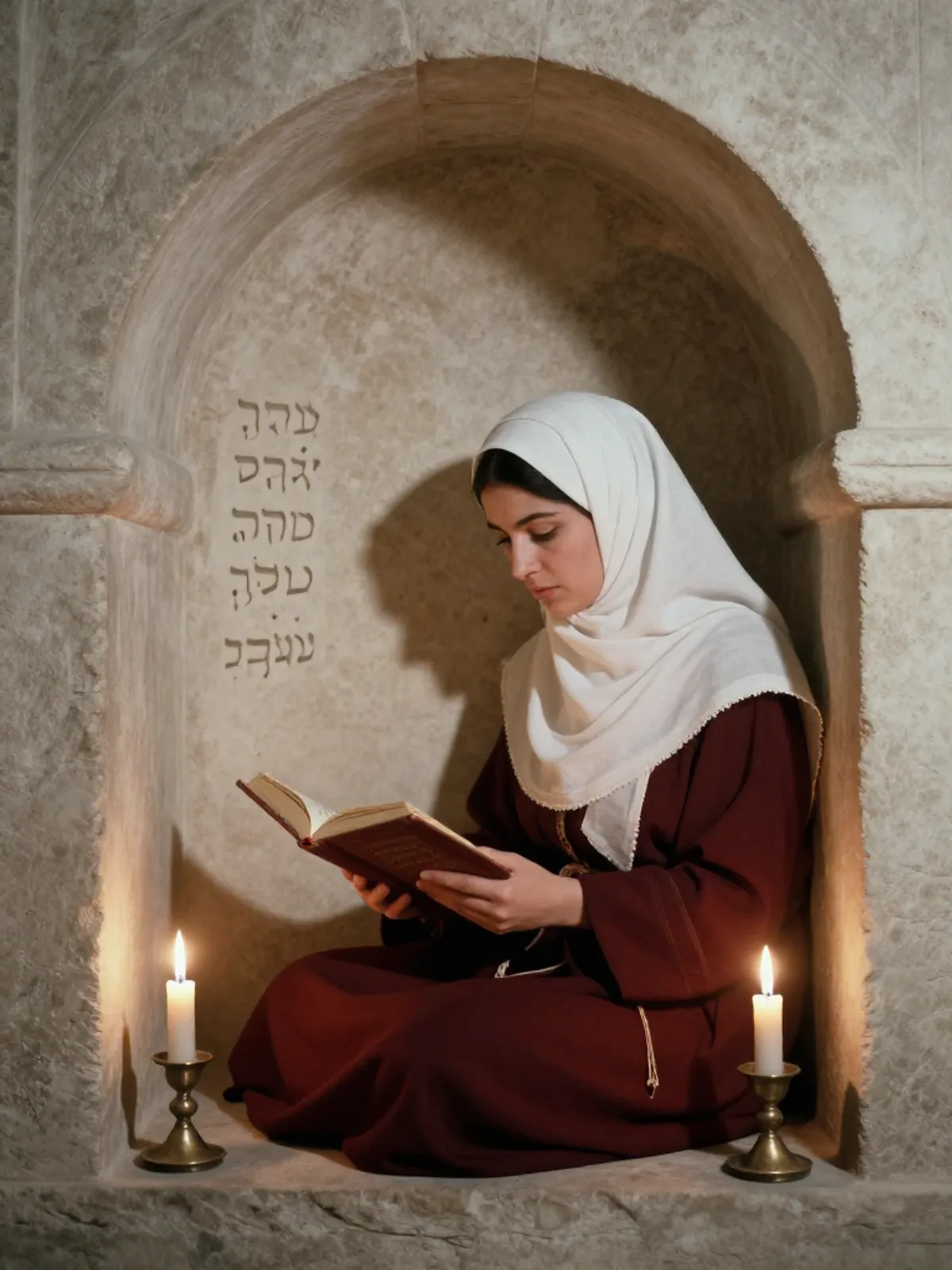
In 1486, Giovanni Pico della Mirandola - twenty-three years old, brilliant, and spectacularly ambitious - presented his 900 Theses to the intellectual world of Rome. Among them was an explosive claim: that Kabbalah, properly understood, confirms the truth of Christianity. That the hidden teachings of the Jews, when read correctly, prove the divinity of Christ, the Trinity, and the Incarnation.
Pico could read Hebrew (unusual for a Christian scholar of his era) and had studied with Jewish teachers, most notably the convert Flavius Mithridates, who translated kabbalistic manuscripts for him. His appropriation was not ignorant - it was deliberate. He believed he had found, within Jewish mysticism itself, the secret validation of Christian theology that would unite the religions. The Pope, for his part, was not convinced. Thirteen of Pico's theses were condemned as heretical, and the full set was banned.
The project was taken up by Johannes Reuchlin, whose De Arte Cabalistica (1517) became the foundational text of Christian Cabala. Reuchlin added the letter Shin (ש) to the Tetragrammaton - the four-letter name of God, YHVH - to produce YHShVH, which he read as Yeheshua, Jesus. The gesture is elegant, audacious, and profoundly presumptuous. It transforms the holiest name in Judaism into a proof of Christianity.
Later, the Jesuit polymath Athanasius Kircher produced elaborate diagrams of the Sephirotic Tree overlaid with Christian symbolism - angels, sacraments, Trinitarian theology - in his Oedipus Aegyptiacus (1652-54). Kircher's engravings are magnificent: the Tree rendered with baroque precision, each Sephirah nested within concentric circles of Latin labels, the whole structure oriented toward a Christological summit. The Tree became a scaffold for a specifically Christian cosmology.
The Christian Cabala tradition continued through the 17th and 18th centuries, influencing thinkers as diverse as Knorr von Rosenroth (whose Kabbala Denudata made kabbalistic texts available in Latin for the first time) and the visionary Emanuel Swedenborg. By the time it reached the 19th century, it had largely merged into the broader current of Western esotericism - the stream that would become Hermetic Qabalah.
What was gained in this translation? A genuine expansion of Christian theological imagination. The Sephirotic framework gave Christian thinkers a language for divine emanation that went beyond the sometimes rigid categories of Scholastic theology. It opened a door to mystical experience within a tradition that had, in many quarters, grown suspicious of it.
What was lost? Context. Ground. The living relationship to Torah and mitzvot (commandments) that gives the Sephirotic framework its meaning. The Christian Cabalists were not wrong that Kabbalah contains ideas resonant with Christian theology - the Sephirah Tiphereth (Beauty, Harmony) does occupy a mediating position on the Tree, and the concept of divine self-limitation (tzimtzum) does rhyme with kenosis. But resonance is not identity. To read Kabbalah as crypto-Christianity is to hear only the harmonics and mistake them for the melody.
It should also be noted that this appropriation occurred in a Europe where Jewish communities lived under Christian political and ecclesiastical authority. The claim "your own mystics secretly prove our theology" carries a different weight when made by the dominant culture about a persecuted minority. The Christian Cabalists were often personally sympathetic to Jews - Reuchlin famously defended Jewish books against burning - but the intellectual gesture itself was an act of power, however refined.
Hermetic Qabalah: The Universal Filing Cabinet
The third tradition emerged in the occult revival of late Victorian England, and it is now, by sheer numbers, the dominant form of Kabbalah in the Western world.
In 1888, three Freemasons - William Wynn Westcott, Samuel Liddell MacGregor Mathers, and William Robert Woodman - founded the Hermetic Order of the Golden Dawn in London. The Order drew on everything available to the Victorian occult imagination: Freemasonry, Rosicrucianism, Enochian magic, Egyptian mythology, Neoplatonism, and Christian Cabala. Its membership would eventually include the poet W.B. Yeats, the actress Florence Farr, and the novelist Arthur Machen.
But the Golden Dawn's genius was organizational: it took the Tree of Life and made it into a universal filing system for esoteric knowledge. Where Jewish Kabbalah saw the Sephirot as the unfolding of a personal God, the Golden Dawn saw a classification system - an architecture for mapping all of reality's correspondences.
Mathers and Westcott mapped the twenty-two paths connecting the Sephirot onto the twenty-two Major Arcana of the Tarot. They assigned astrological correspondences to each Sephirah - Saturn to Binah, the Sun to Tiphereth, the Moon to Yesod. They grafted Greek, Egyptian, and Hindu deities onto the framework. The Tree became a kind of periodic table of the sacred, a master key that could, in principle, organize every symbol system humanity had ever produced.
Aleister Crowley, the Golden Dawn's most famous and most disruptive member, pushed this further - and in a characteristically Crowleyan direction. His 777 (1909) is essentially a vast table of correspondences - columns upon columns listing which color, which perfume, which animal, which drug, which god belongs to which path and which Sephirah. It is a monument to the systematizing impulse, and it is both impressive and faintly absurd. One can admire the architecture while wondering whether the building serves any purpose beyond its own ingenuity.
Crowley's later work, particularly The Book of Thoth (1944), deepened the Tarot-Qabalah synthesis into something genuinely his own - a symbolic language for what he called "the method of science, the aim of religion." Whatever one thinks of Crowley as a person (and there is much to object to), his Qabalah is not trivial. It is a serious, if eccentric, attempt to build a Western initiatory path using the Tree as its spine.
The Tree of Life has got to be learnt by heart; you must know it backwards, forwards, sideways, and upside down.
- Aleister Crowley, Magick Without Tears
This is Qabalah as technology - a tool for organizing consciousness, a mnemonic architecture for the practicing magician. The practitioner ascends the Tree not through prayer and Torah study but through ritual, visualization, and the disciplined use of symbol. Each Sephirah becomes a chamber of the mind to be entered, explored, and integrated.
It works, in the sense that any sufficiently rich symbol system works when you commit to it deeply enough. Practitioners of Hermetic Qabalah report genuine transformative experiences - encounters with archetypal forces, deepened self-knowledge, expanded awareness. These reports should not be dismissed. But it is a very different thing from what Rabbi Shimon bar Yochai was doing in the vineyards of Galilee.
The Hermetic tradition's greatest strength is also its deepest vulnerability: by making the Tree universal, it made it rootless. The Sephirot, which in Jewish Kabbalah are the living dynamics of a personal God, become in Hermetic Qabalah something closer to abstract categories - bins into which any content can be sorted. Chesed (Mercy) is no longer God's lovingkindness toward Israel; it is Jupiter, the color blue, the number four, and the Greek god Zeus - all filed together in the same drawer.
Today, if you search for "Kabbalah" online, you will overwhelmingly find Hermetic Qabalah - often without any acknowledgment that a prior tradition exists. The Tarot-on-the-Tree model has become so dominant that many practitioners are genuinely surprised to learn that Jewish Kabbalah has no Tarot correspondences at all. The map has replaced the territory.
What Gets Lost in Translation
Each translation strips context, and context is not decoration - it is load-bearing structure. A symbol removed from its native framework does not simply float free - it attaches to whatever framework is nearest. And the nearest framework is usually the assumptions of the person doing the removing.
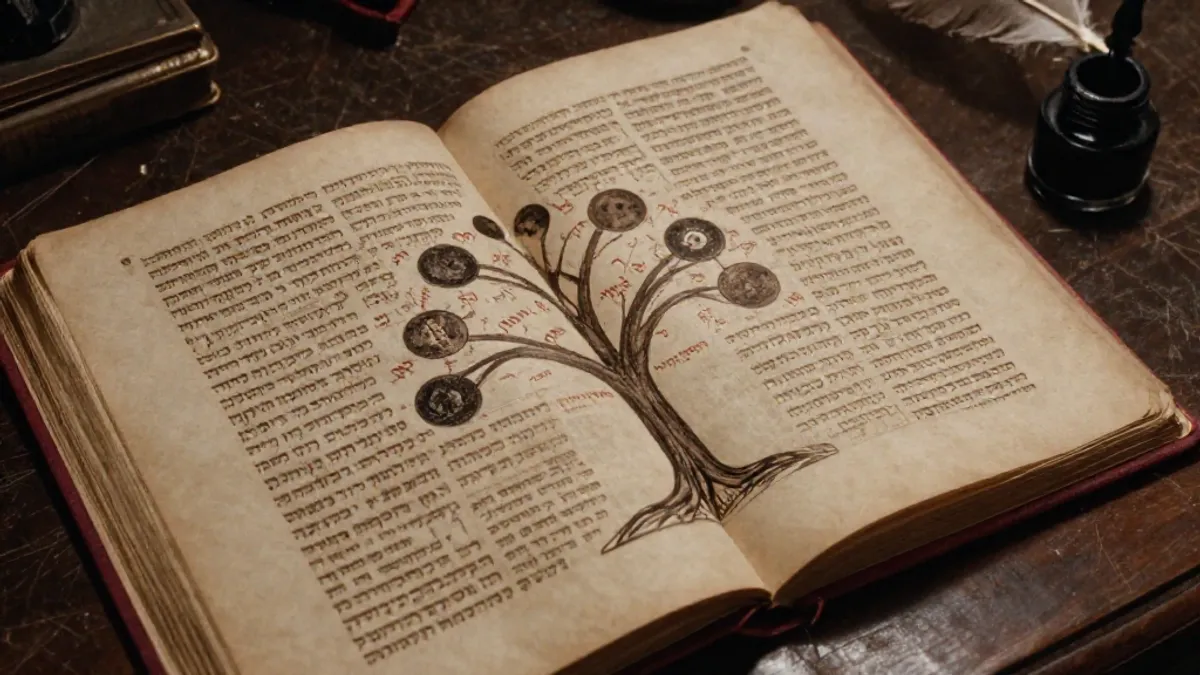
Jewish Kabbalah without Torah is like neidan without the Daodejing. You can learn the map of the Sephirot, memorize the correspondences, even have genuine mystical experiences using the framework. But you have lost the ground - the living tradition of interpretation, the ethical demands of halakha, the communal practice of prayer and study that gives Kabbalah its meaning and its discipline. The Sephirot are not free-floating archetypes. In their native tradition, they are the way God relates to creation, and that relationship is covenantal - it carries obligations.
Christian Cabala stripped the covenant and replaced it with Christology. Hermetic Qabalah stripped the Christology and replaced it with correspondence tables. Each removal made the system more portable and less rooted.
The final stage of this decontextualization is the pop-Kabbalah of celebrity culture - the red string bracelets, the Kabbalah Centre's marketing of "Kabbalah Water," the vague promises of spiritual empowerment stripped of any obligation to study, practice, or change. Many Jewish scholars have noted, with a mixture of exasperation and sorrow, how thoroughly kabbalistic symbolism has been wrenched from its context - turned into product, into brand, into aesthetic.
This is not a minor complaint. When a tradition that demands decades of preparation is repackaged as a weekend workshop, something essential is not merely diluted but destroyed. The tradition's own internal safeguards - the requirements of maturity, learning, community - existed precisely because the material is powerful enough to mislead when encountered without preparation.
The pattern is not unique to Kabbalah. Readers familiar with Chinese traditions will recognize it immediately: the same trajectory that turns centuries of neidan practice into a thirty-day "qigong detox," or reduces the I-Ching to a fortune-telling app. Every living tradition faces this pressure. Decontextualization is the characteristic spiritual disease of consumer culture, and no tradition - Eastern or Western, ancient or modern - is immune.
What makes the kabbalistic case particularly striking is the speed and completeness of the transformation. In less than five centuries, a secret Jewish mystical practice became a public, commercialized, globally marketed product. The red string bracelet, sold for twenty-six dollars and endorsed by pop stars, contains no prayer, no intention, no teaching. It is pure signifier, emptied of the signified.
What Gets Found in Translation
And yet - fairness demands the other side be heard.
The Hermetic tradition's universalizing impulse is not mere theft. It arises from a genuine intuition: that the great symbol systems of humanity are not arbitrary, that they describe real features of consciousness, and that a framework capacious enough to hold them all might reveal structural truths invisible from within any single tradition.
Dion Fortune's The Mystical Qabalah (1935) is not a shallow book. It is a serious devotional and philosophical work, written by a practitioner who spent decades in disciplined inner work. Fortune understood that she was practicing a different tradition from Jewish Kabbalah, and she said so explicitly:
The Tree of Life is a compendium of science, psychology, philosophy, and theology.
- Dion Fortune, The Mystical Qabalah
Her Qabalah is a Western mystery tradition that uses the Tree as its central glyph - not a claim to be practicing Judaism. She approached the Sephirot as living realities to be experienced, not merely catalogued, and her writing carries the weight of genuine contemplative depth.
The bridges the Hermetic tradition builds are real. A practitioner who has worked the Tree of Life in the Golden Dawn style can recognize the structure of the Sephirot when encountering the chakras, or the dantian, or the Neoplatonic hypostases. Whether these parallels are deep or superficial is a legitimate question - but the question itself is valuable. It is a question that a tradition locked within its own walls cannot ask.
Israel Regardie, who published the Golden Dawn's secret rituals in 1937 (to the fury of its remaining members), argued that the Qabalah was not property but inheritance - that the Tree of Life belongs to anyone willing to climb it. This is a debatable claim, but it is not a frivolous one.
The issue is not which Kabbalah is "real." All three are real - real in their histories, their practices, their communities, their fruits. The question is whether practitioners understand what soil their tree is planted in.
A Hermetic Qabalist who knows she is practicing a 19th-century synthesis, rooted in Renaissance Christian interpretation of medieval Jewish mysticism, and who respects each layer of that inheritance - she stands on solid ground. A practitioner who imagines he is doing what the Zohar's authors did, because he has memorized the same diagram - he is lost, however sincerely.
The same principle applies across traditions. A Westerner practicing neidan owes it to the tradition to know that zuowang (sitting and forgetting) arose within a specific Daoist cosmology, not in a vacuum. Honest borrowing begins with honest acknowledgment. The bridge between traditions must be built from both sides, and the first plank is respect for what you did not invent.
The Tree Stands
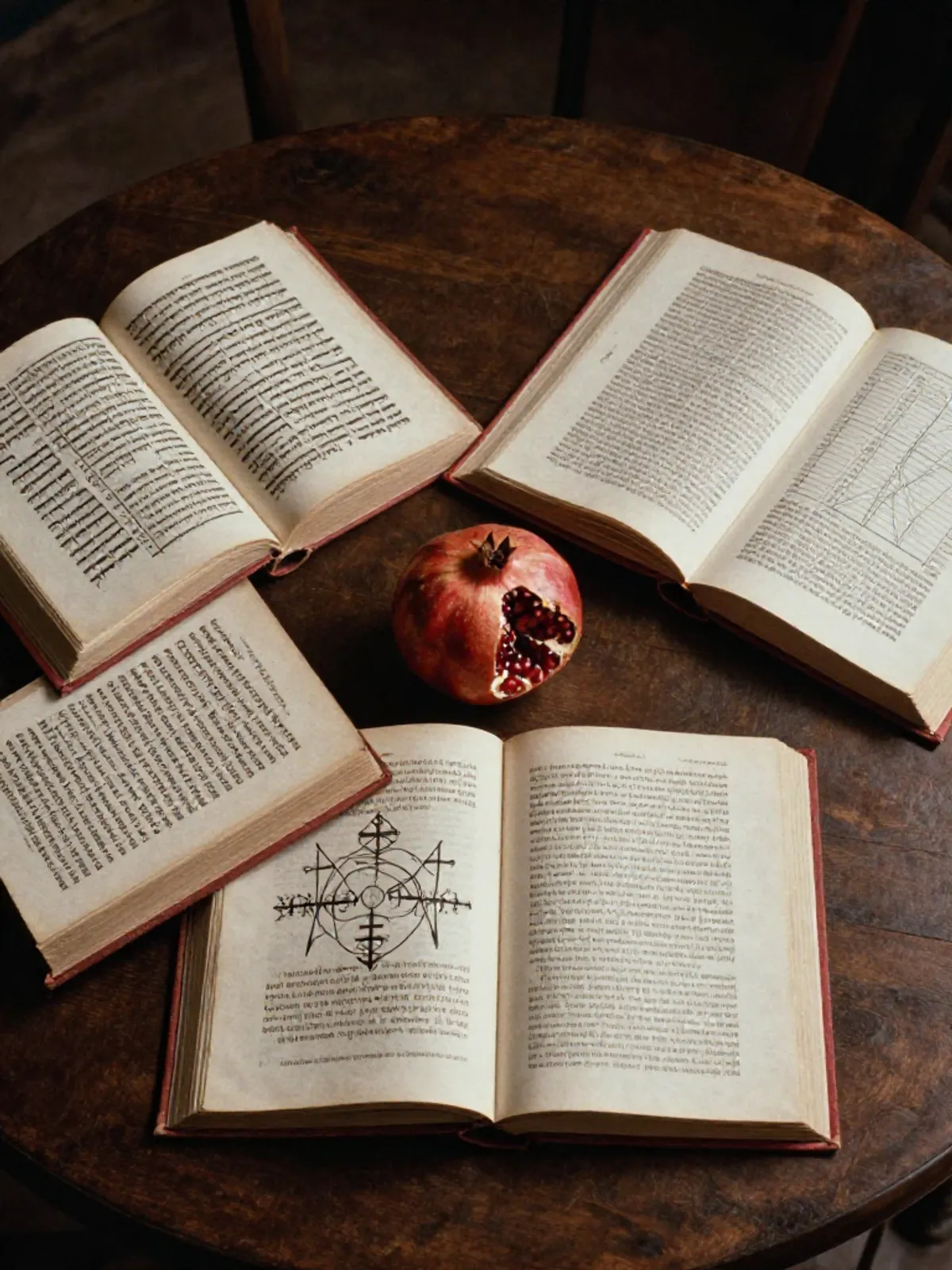
Three traditions. Three spellings. Three soils.
One tree - or perhaps three trees grown from cuttings of the same root, each shaped by the climate where it was planted. The Jewish tree grows in the soil of Torah. The Christian tree grows in the soil of incarnation. The Hermetic tree grows in the soil of universal correspondence. Each produces real fruit. None produces the same fruit as the others.
The Tree of Life is sturdy enough to survive transplantation. It has survived it three times already, and it may survive further transplantations yet - into psychotherapy, into artificial intelligence research, into whatever frameworks the future devises for mapping the structure of mind and meaning.
But a gardener who does not know the original soil will not understand why certain branches flourish and others wither in the new ground. The first act of honest practice, in any of these traditions, is to ask: Where did this come from? What was it for? And what have I changed by bringing it here?
These are not rhetorical questions. They are the beginning of the work.
In the kabbalistic tradition, the act of receiving (kabbalah) implies a giver. And the act of giving implies a relationship - one that carries obligations, gratitude, and the responsibility to transmit what was received with care. This is true whether the giver is God at Sinai, a Renaissance humanist in Rome, or a Victorian magician in a London lodge. The chain of transmission matters. What you do with what you receive matters more.
Next in this series: the Shekhinah, Inanna, Isis, and the feminine face of the divine - how the Great Goddess migrated across civilizations, and what she carried with her.