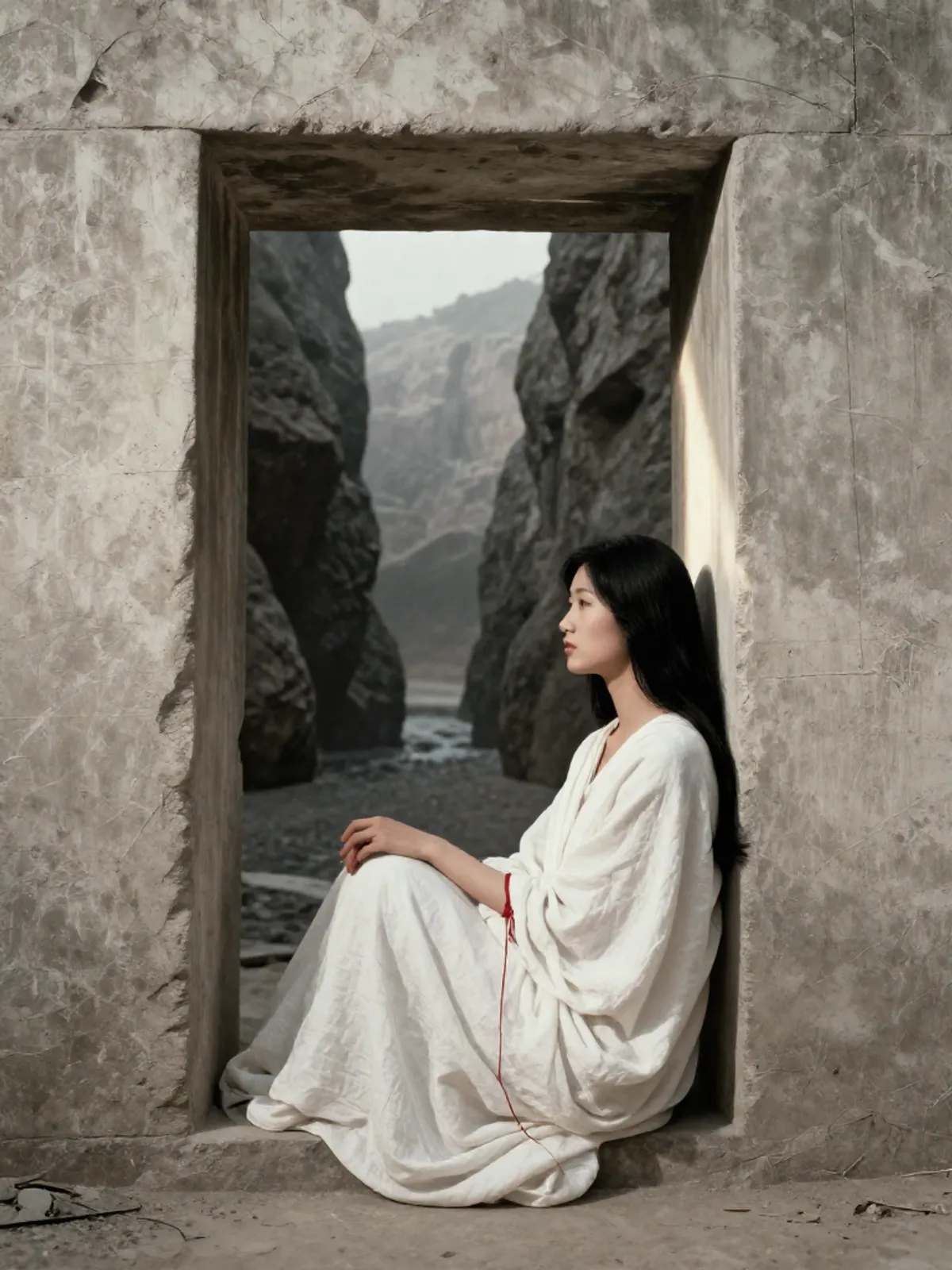
The Valley Spirit Never Dies
In Chapter 6 of the Daodejing, Laozi writes:
谷神不死,是謂玄牝。玄牝之門,是謂天地根。綿綿若存,用之不勤。
The valley spirit never dies - it is called the mysterious feminine. The gateway of the mysterious feminine is called the root of heaven and earth. Dimly visible, it seems to exist. Use it - it is never exhausted.
This is not metaphor. It is a map.
Laozi names the generative source of all reality as feminine. Not passive. Not secondary. Primary. The valley does not reach - it receives. And because it receives, everything flows toward it. The valley is low, hollow, empty - and precisely because it is empty, it can hold everything that flows down from the peaks. This is the logic of the Dao: what empties itself becomes inexhaustible.
The last line is easy to miss but essential: use it - it is never exhausted. The mysterious feminine is not an abstraction. It is a capacity available to the practitioner. Laozi is pointing toward a specific quality of awareness - one that can be cultivated, returned to, inhabited. The valley spirit is not something you believe in. It is something you practice becoming.
The Mother of All Things
The feminine principle appears in the Daodejing not once but as a sustained motif across the entire text. Chapter 1 introduces it immediately:
無名天地之始;有名萬物之母。
The nameless is the beginning of heaven and earth; the named is the mother of the ten thousand things.
The Dao in its primordial aspect is beyond naming - but as soon as it begins to differentiate, to generate the world of form, it takes on the character of the mother (mu, 母). This is not incidental language. Laozi could have chosen any image for the source of creation. He chose the one that gives birth.
Chapter 25 goes further:
有物混成,先天地生。寂兮寥兮,獨立而不改,周行而不殆,可以為天下母。
There is a thing, formed in chaos, born before heaven and earth. Silent and void, it stands alone and does not change, moves in cycles and does not tire. It can be regarded as the mother of all under heaven.
The Dao is tianxia mu (天下母) - the mother of all under heaven. This is cosmological language, but it is also experiential. In meditation, when thought ceases and the mind becomes still, what remains has the quality of a vast, formless womb - dark, silent, pregnant with everything that could come into being. The practitioner does not create this space. She returns to it.
The Valley as Meditation
The valley (gu, 谷) is one of the most important meditation images in the Daoist tradition, and it is worth sitting with for a moment.
A valley is defined by what it is not. It is the space between mountains. It has no substance of its own - it is pure receptivity, pure capacity. And yet everything alive in a mountain landscape gathers in the valley: water, soil, creatures, seeds. Life concentrates where there is room for it.
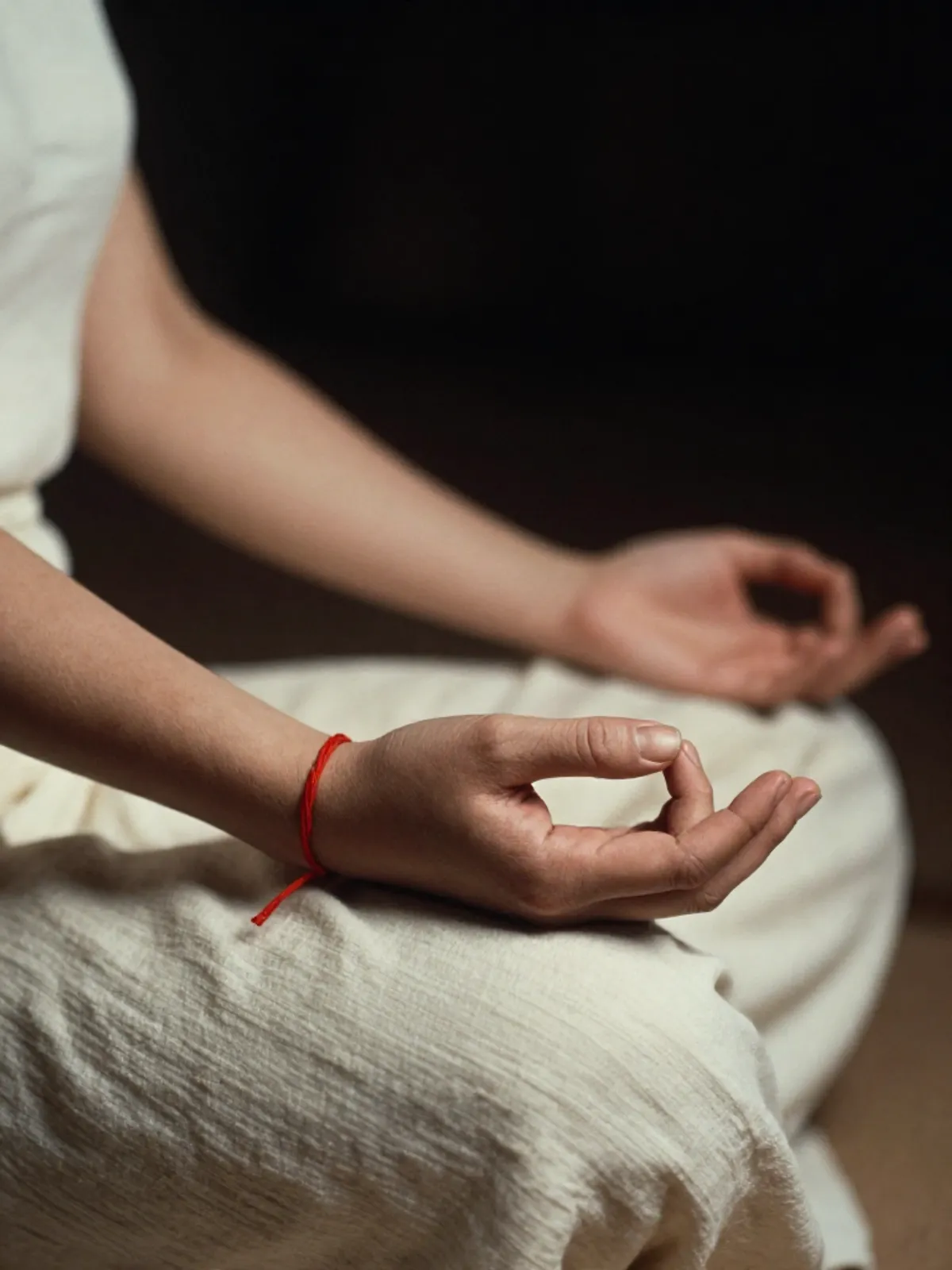
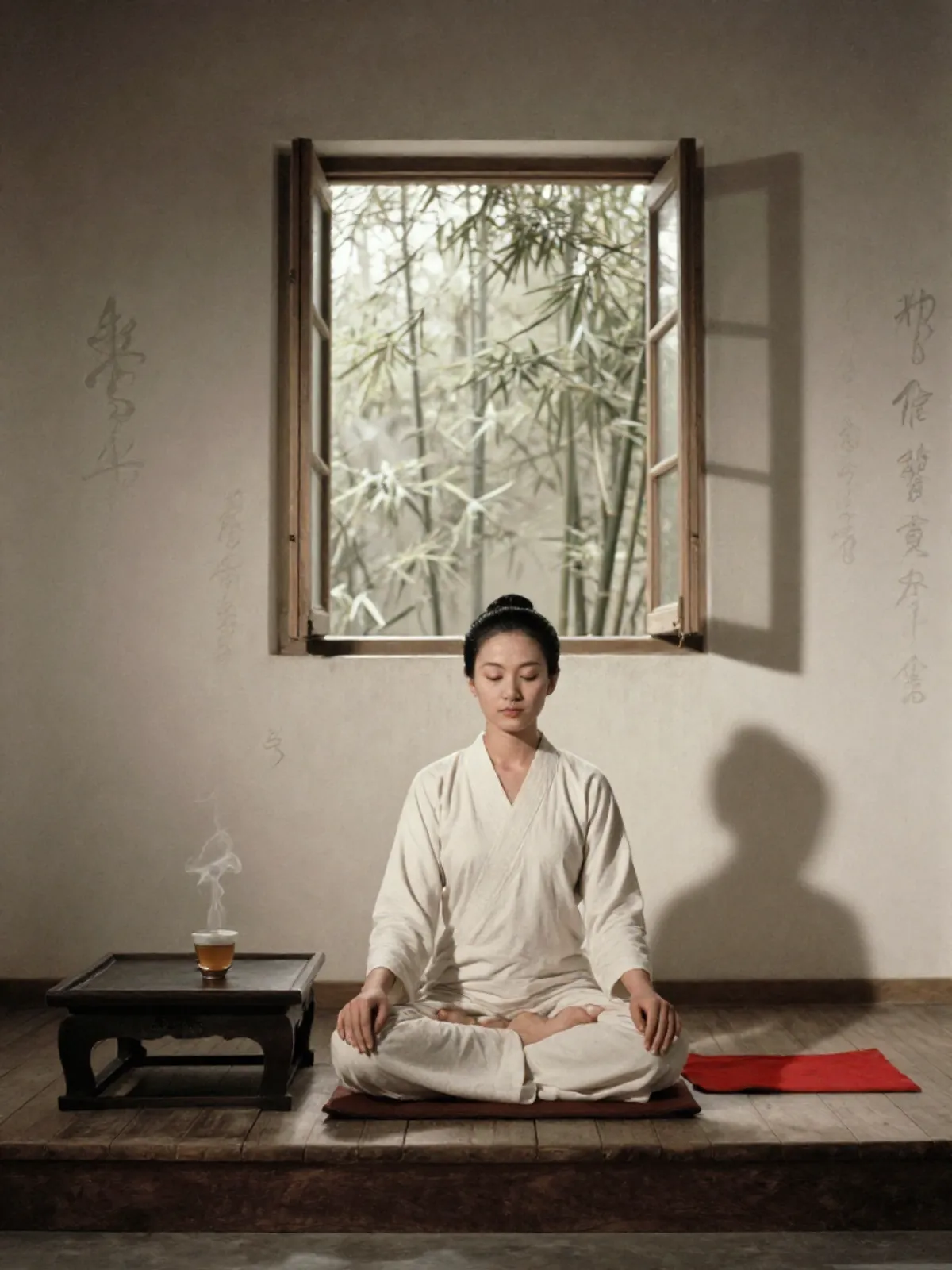
In seated meditation (jingzuo, 靜坐), practitioners sometimes work with the valley as an internal image. The instruction is not to visualize a landscape, exactly, but to cultivate the quality of the valley within the body-mind. Let the chest become open and hollow. Let the breath descend. Let the awareness settle into the lower abdomen - the dantian (丹田) - and simply receive whatever arises, without grasping or pushing away.
Chapter 15 describes the ancient Daoist practitioners in terms that evoke this same quality:
曠兮其若谷。
Open and broad - like a valley.
This is not a personality trait. It is a description of what happens when someone has practiced long enough that their habitual contraction - the constant reaching, grasping, defending - has softened. What remains is spacious, receptive, and alive.
Water, Not Stone
The Daodejing returns again and again to water as the highest image of the Dao in action:
上善若水。水善利萬物而不爭,處眾人之所惡,故幾於道。
The highest good is like water. Water benefits all things and does not compete. It dwells in places that people disdain. Therefore it is close to the Dao.
This is not an instruction to be meek. The most powerful force in nature - the one that dissolves stone, that gives life to every living thing - is soft, yielding, and relentless.
Chapter 78 makes the point explicit:
天下莫柔弱於水,而攻堅強者莫之能勝,以其無以易之。弱之勝強,柔之勝剛,天下莫不知,莫能行。
Nothing in the world is softer and weaker than water, yet nothing is better at attacking what is hard and strong. Nothing can substitute for it. The weak overcomes the strong; the soft overcomes the hard. Everyone in the world knows this, yet no one can put it into practice.
The last line is the crucial one. Everyone knows softness is powerful. No one can actually do it. This is because yielding is not a strategy - it is a state of being that requires genuine release of the ego's grip. You cannot fake receptivity. You cannot perform surrender. The feminine principle in the Dao is not a tactic. It is a transformation.
Water finds the lowest place. It does not assert its shape - it takes the shape of whatever contains it. And yet it is the one force that, given time, reshapes everything it touches. This is the paradox at the heart of the Daoist understanding of the feminine: what yields is what endures.
The Feminine and Wu Wei
The connection between the feminine principle and wu wei (無為) - usually translated as "non-action" or "effortless action" - runs deeper than most commentators acknowledge. They are not parallel concepts. They are the same concept, seen from different angles.
Chapter 37 states:
道常無為而無不為。
The Dao is constantly wu wei, yet nothing is left undone.
And Chapter 61 applies this directly to the image of the feminine:
大國者下流,天下之交,天下之牝。牝常以靜勝牡,以靜為下。
A great state is like a low-lying river basin - the convergence point of the world, the feminine of the world. The feminine always overcomes the masculine through stillness. Through stillness, it takes the lower position.
The feminine overcomes through jing (靜) - stillness. Not through force, not through cleverness, but through the willingness to be still, to be low, to let things come. Wu wei is not doing nothing. It is the art of doing by not-forcing, of accomplishing by yielding - and this is precisely the art of the feminine as Laozi describes it.
Chapter 28 brings these threads together:
知其雄,守其雌,為天下谿。
Know the masculine, but hold to the feminine - become the valley stream of the world.
To know the masculine - to understand assertive force, to be capable of it - but to hold to the feminine: this is the discipline. The valley stream does not need to push. Everything flows toward it because it is lower. This is wu wei in its most concentrated form.
The Dark Female in Neidan Practice
The term xuanpin (玄牝) - the Dark Female or Mysterious Feminine - reappears in the neidan (inner alchemy, 內丹) tradition as a technical term with precise meditative meaning. It is no longer just Laozi's cosmological image. It becomes a locus of practice.
In the neidan literature, the xuanpin is often identified with the space between the kidneys, or with the junction point where prenatal and postnatal qi meet. The Song dynasty master Zhang Boduan (張伯端), in his Wuzhen pian (悟真篇, "Awakening to Reality"), uses the term to describe the place where the alchemical work begins - not a physical organ, but a felt sense of depth within the body where stillness concentrates and transformation becomes possible.
The practical instruction is deceptively simple: bring attention to the lower dantian. Let the breath become slow and fine. Let the mind descend from the head into the belly. In this descent, there is a quality of return - a sense of coming back to something prior to thought, prior to identity, prior to effort. The texts call this gui gen (歸根) - returning to the root. And the root, as Chapter 6 tells us, is the gateway of the mysterious feminine.
This is not abstract philosophy. It is a description of what happens in the body when a practitioner sits still for long enough. The thinking mind quiets. The awareness sinks. And what it sinks into has a quality that can only be described as feminine: dark, receptive, warm, generative, and inexhaustible.
The Womb as Alchemical Vessel
In the neidan traditions, the lower dantian - the energy center below the navel - is understood as a crucible of transformation. For women practitioners, this center has always carried a double resonance: it is both the alchemical furnace of spiritual cultivation and the literal site of creation.
The Tang dynasty physician Sun Simiao (孫思邈) observed that women's cultivation begins differently than men's - not because it is lesser, but because the body's relationship to qi follows a different rhythm. Menstruation, pregnancy, menopause: not obstacles to practice, but its curriculum.
The male alchemical tradition centers on the transformation of jing (精, essence) into qi (氣, vital energy) and qi into shen (神, spirit). The first stage, lian jing hua qi (煉精化氣), often focuses on the retention and sublimation of sexual energy. For women, the corresponding first stage is called zhan chi long (斬赤龍) - "slaying the red dragon" - which involves the cessation of menstruation through meditative practice, not through suppression but through a refinement of the body's energetic economy.
This is delicate territory, easily misunderstood. The point is not that menstruation is impure or undesirable. The point is that the body's creative energy, which normally expresses itself in the reproductive cycle, can be redirected toward a different kind of creation - the formation of what the texts call the shengtai (聖胎), the "holy embryo" or spiritual body. The womb that can create a child can also create a Buddha.
Sun Bu'er and the Way of the Woman Immortal
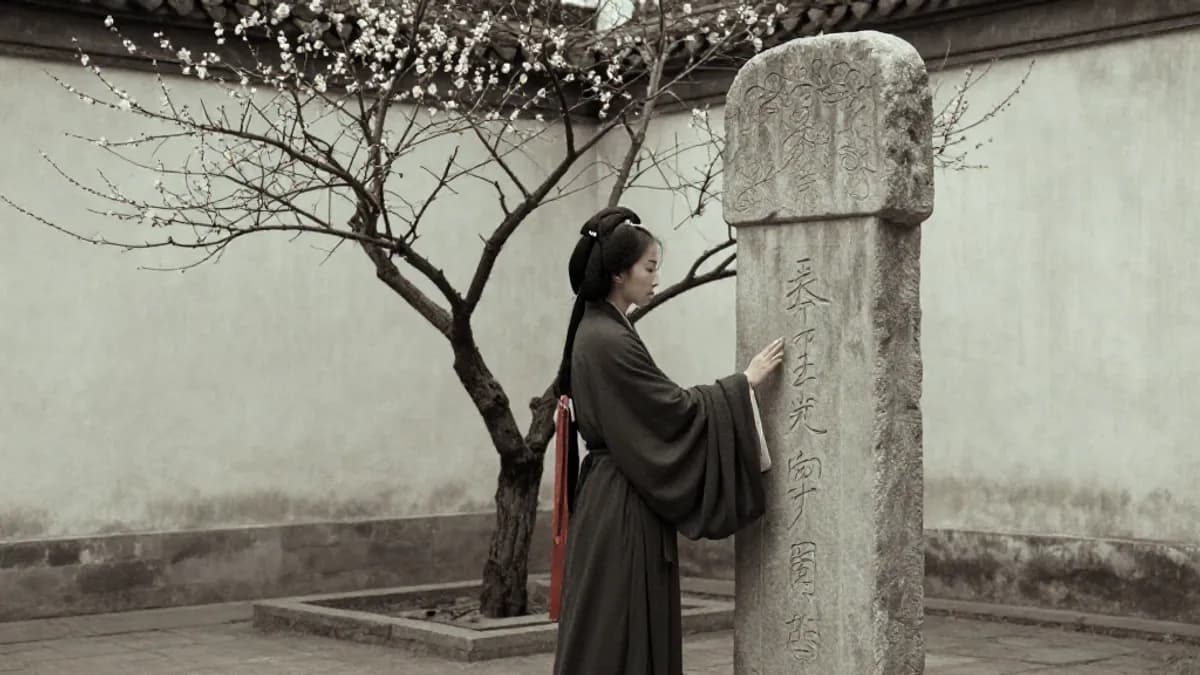
No discussion of the feminine in Daoism is complete without Sun Bu'er (孫不二, 1119–1182), one of the Seven Perfected (qizhen, 七真) of the Quanzhen (Complete Reality) school - one of the most important Daoist lineages of the last thousand years.
Sun Bu'er was the wife of Ma Yu (馬鈺), a wealthy landowner. When the eccentric master Wang Chongyang (王重陽) arrived at their estate and refused to leave, both husband and wife eventually became his disciples. The hagiographies tell us that Sun Bu'er, in order to practice without harassment on the road, deliberately scarred her face with hot oil before setting out on her own as a wandering ascetic. Whether this is literal history or legend, the story encodes a teaching: the path of cultivation requires the willingness to sacrifice surface beauty for inner transformation.
Sun Bu'er is credited with a series of poems on women's alchemical practice - the Sun Bu'er nüdan shi (孫不二女丹詩) - that circulated widely in later centuries. These poems describe the stages of women's cultivation in precise, embodied language. They speak of quieting the heart-mind (xin, 心), harmonizing the breath, and nurturing the spirit in the lower dantian. They are practical, specific, and unapologetically centered on the female body as the vessel of spiritual work.
What makes Sun Bu'er significant is not merely that she was a woman who attained realization in a tradition dominated by men. It is that she articulated a path that was specific to women's experience - one that did not require women to become honorary men in order to practice. Her work insists that the female body, with its particular rhythms and capacities, is a complete vehicle for awakening.
A Different Framework
It is tempting, from a modern Western standpoint, to read the Daoist feminine through the lens of contemporary feminism. There are genuine points of contact - any tradition that places the feminine at the cosmological root has something to say to a culture that has systematically devalued it.
But the frameworks are different, and the differences matter.
Western feminism, broadly, is a political project: it seeks to correct an injustice, to redistribute power, to dismantle hierarchies of oppression. It operates in the domain of social relations and rights. The Daoist feminine operates in a different register entirely. It is not primarily about women's social position - though it has implications for it. It is about the nature of reality itself.
When Laozi says the Dao is like the mother of all things, he is not making a political claim. He is making an ontological one. The deepest structure of reality is receptive, yielding, generative. This is not a gendered statement in the social sense - men and women alike are called to embody it. Chapter 28's instruction to "know the masculine but hold to the feminine" is addressed to everyone. The sage, regardless of sex, cultivates the feminine principle because it is closer to the Dao.
This means that the Daoist feminine is both more radical and less political than Western feminism. More radical, because it does not merely argue that women deserve equal treatment - it places the feminine at the absolute foundation of existence. Less political, because it is not primarily concerned with social arrangements but with the practitioner's relationship to the source.
For contemporary practitioners, the task is not to choose between these frameworks but to understand what each one illuminates. Feminism asks: who has power, and is it justly distributed? Daoism asks: what is the nature of power itself, and how do we align with it? Both questions deserve answers. They are not the same question.
A Tradition in Recovery
Much of what survives in the historical record was written by men, for men. The nüdan (women's alchemy, 女丹) texts that do exist - such as the Nüdan Hebian (女丹合編, "Collected Works on Women's Alchemy") compiled in the Qing dynasty - are only now being translated and studied seriously.
The Nüdan Hebian is not a single text but an anthology. It gathers instructions, poems, and commentaries from multiple lineages, spanning several centuries. Some of its material is attributed to Sun Bu'er. Other sections draw on the teachings of He Xiangu (何仙姑), one of the Eight Immortals, or on anonymous women practitioners whose names have been lost.
What these texts actually teach is remarkably consistent. The first principle is always jing xin (靜心) - quieting the heart-mind. Before any energetic work begins, the practitioner must learn to sit with herself, to let the turbulence of thought and emotion settle. This is not different from the instruction given to male practitioners - but the nüdan texts emphasize it with particular urgency, perhaps because they understood that women in traditional Chinese society had few opportunities for solitude, and that the inner quiet required for alchemical work had to be carved out deliberately.
The second principle involves working with the breath and the blood. The nüdan texts describe specific breathing practices (tu na, 吐納) designed to harmonize the menstrual cycle, and visualization practices that direct awareness into the breasts and uterus - the two energy centers that are unique to women's practice. These are not esoteric abstractions. They are precise somatic instructions, rooted in centuries of women's lived experience.
These texts deserve to be read - not simplified, but clarified. Not appropriated, but met on their own terms. The feminine in the Dao is not a metaphor for something else. It is the thing itself. The valley does not symbolize receptivity. It is receptivity. The water does not represent yielding. It is yielding. And the mysterious feminine is not a poetic name for the Dao. It is the Dao's own self-description - the way reality speaks about its deepest nature when it finally finds a voice.