A Map Circulating on the Internet
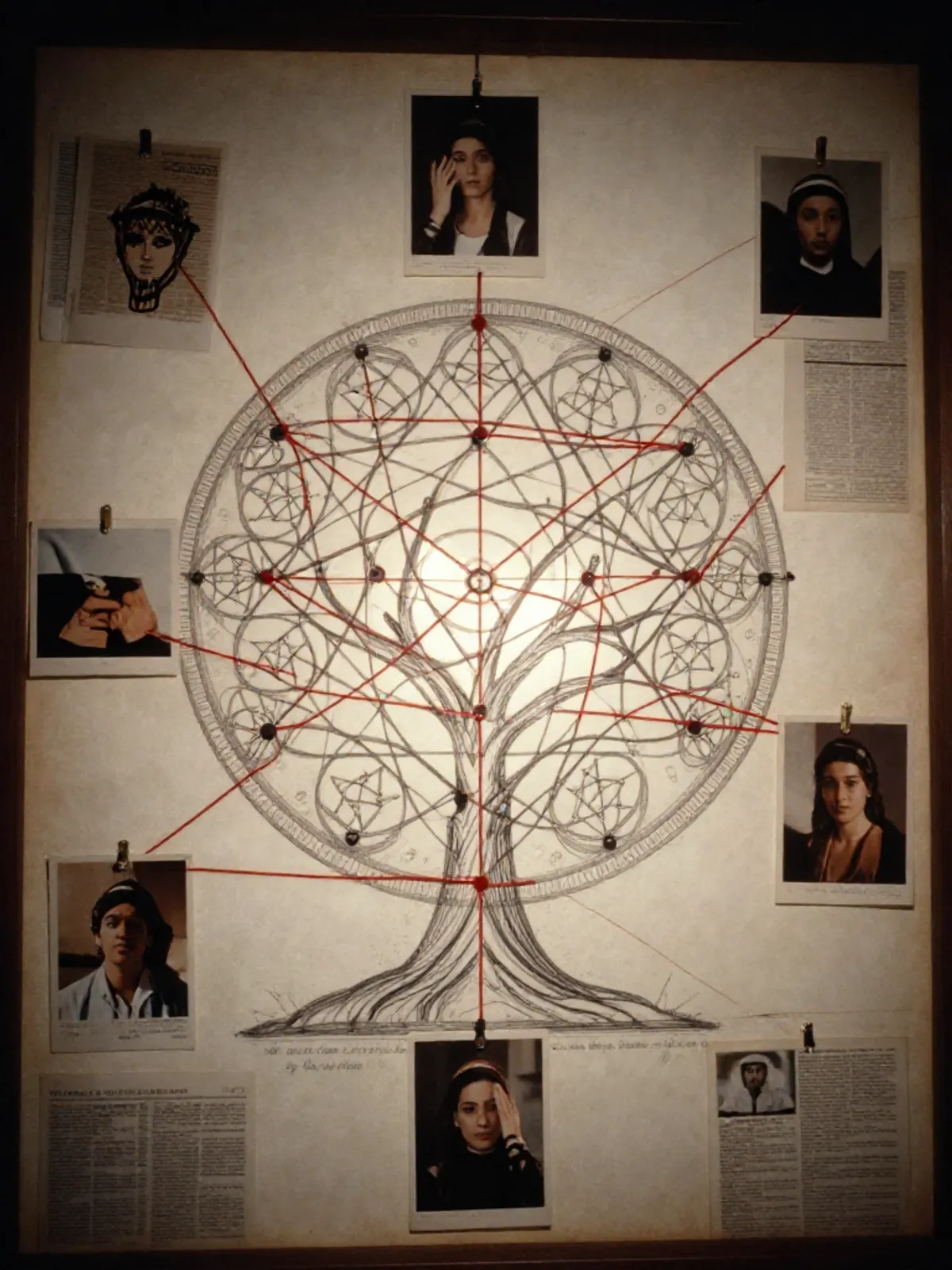
There is a map circulating on the internet. You may have encountered it - shared in forums, pinned to image boards, passed around with the breathless reverence that conspiracy communities reserve for what they call "research."
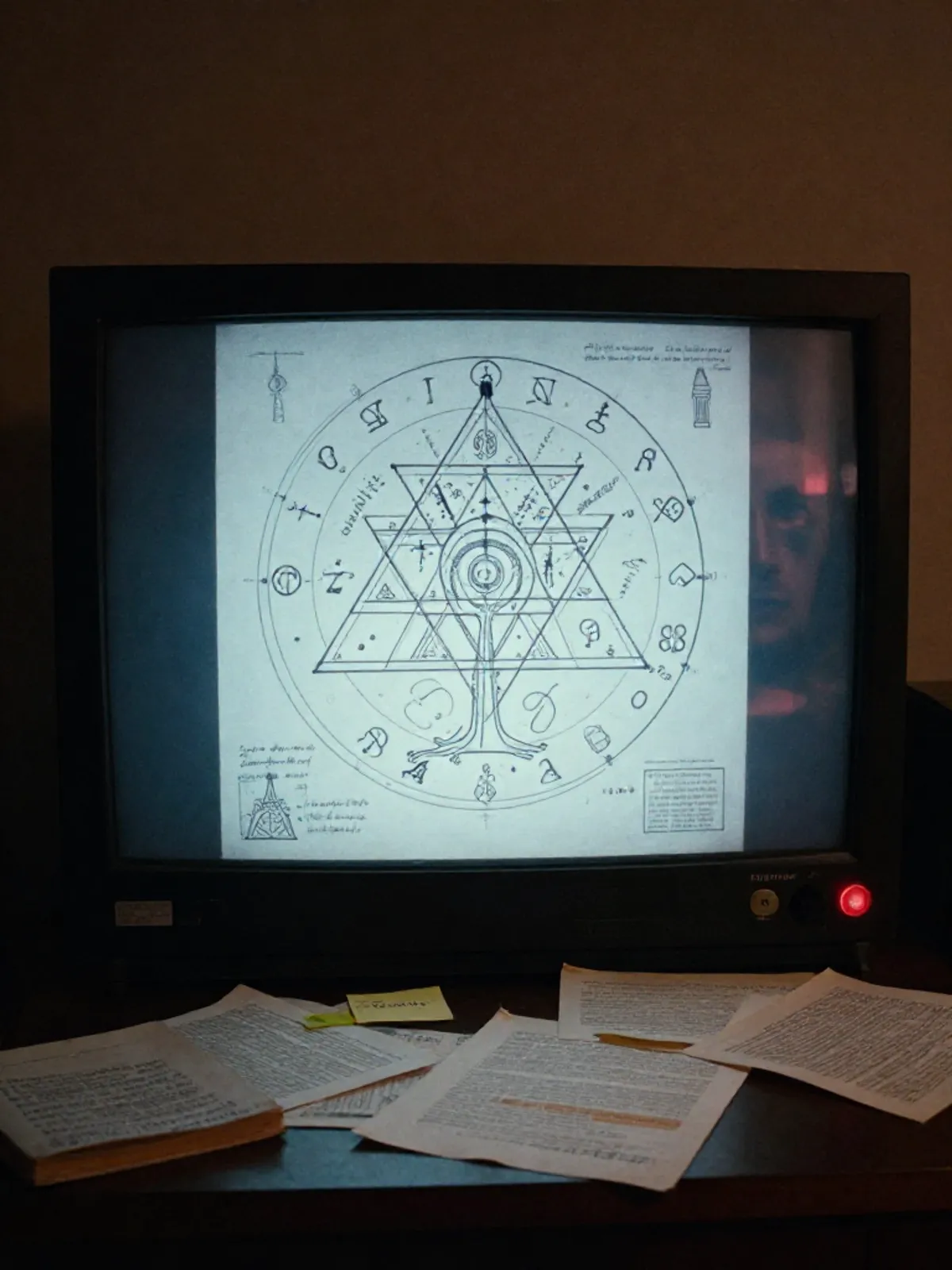
At first glance, a viewer familiar with Kabbalah will recognize the structure immediately: ten spheres arranged on three pillars, connected by paths. It is the Tree of Life, the Etz Chayyim, the contemplative diagram we explored in the first article of this series. But where the Sephirot should hold divine attributes - Crown, Wisdom, Understanding, Beauty - each sphere has been repurposed. Kether contains not the first emanation of the Infinite but "Canaanites." Chokmah holds not Wisdom but "Babylon." Binah is not Understanding but "Pharaohs of Egypt." And so it descends: Judea, the Roman Empire, the Vatican, the Knights Templar, the Khazars, Switzerland, and at Malkuth - the Kingdom, the dwelling place of the Shekhinah - the United States of America.
The three pillars have been recast as well. The Pillar of Severity traces a lineage from Egypt through Rome and the Templars to Freemasonry. The Pillar of Mercy runs from Babylon through Judea and the Khazars to the Jesuits. The Middle Pillar - which in authentic Kabbalah is the axis of balance, the spine of the Tree - becomes the throughline of monotheism, the Vatican, Switzerland, the Illuminati, and the USA.
The bottom of the map features a sprawl of deity correspondences across traditions - the kind of comparative syncretism we examined in earlier articles of this series, but stripped of all scholarly care and pressed into service as evidence of a single, continuous, hidden religion.
The contemplative map has become a power map. A diagram designed for the soul's ascent has been conscripted to tell a story about the world's descent into conspiracy.
What the Map Gets Right (Accidentally)
Here is the unsettling thing: the structural metaphor almost works. And this is precisely what makes it dangerous.
The Tree of Life describes emanation - how the formless becomes form, how divine light descends through successive stages until it crystallizes in the material world. As we discussed in our first article, this is the logic of the Tree: Kether's undifferentiated will becomes Chokmah's creative flash, which becomes Binah's receptive form, which unfolds through six further stages until it arrives at Malkuth, the Kingdom, the world of matter and presence.
The conspiracy map borrows this logic and applies it to power. Ancient civilizations emanate their influence downward through time, each stage giving rise to the next, until the whole flow arrives at the modern nation-state. The structure is seductive because it mirrors a genuine insight about how traditions transmit themselves across centuries. Cultural influence does flow. Ideas do descend through institutional lineages. The Tree's architecture of emanation lends the conspiracy an air of depth, an aesthetic of profundity, that a simple timeline or flowchart never could.
This is not an accident. Esoteric imagery is chosen by conspiracy movements specifically because it carries authority. The symbol does half the persuading. A viewer who has never studied Kabbalah still feels, on some intuitive level, that a diagram this beautiful and this ancient must contain something true. The map's power lies not in its content - which, as we will see, is largely fabricated - but in the borrowed gravitas of the form.
There is also a subtler accuracy at work. The Tree of Life does describe a movement from unity to multiplicity, from the hidden to the revealed. So does actual history. Civilizations do influence one another. Institutions do inherit from predecessors. The problem is not that the map sees connections - it is that the map sees only connections, and only the connections that serve its predetermined narrative. This is the difference between a map that reveals territory and a map that replaces it.
What the Map Gets Wrong (Deliberately)
Let us be precise about the falsehoods. This is not a matter of interpretation or competing narratives. The map makes specific historical claims, and those claims are wrong.
The Khazar hypothesis. The map places "Khazars" at Hod, the Sephirah of Splendor, and treats them as a key node in the transmission of power. The underlying claim is a familiar one in antisemitic literature: that Ashkenazi Jews are not descendants of ancient Israelites but of Khazars, a Turkic people whose ruling class converted to Judaism in the eighth century CE. The implication - sometimes stated, sometimes merely insinuated - is that modern Jews have no legitimate connection to the Land of Israel or to biblical tradition.
This hypothesis has been decisively rejected by every relevant discipline. Genetic studies - including large-scale analyses of mitochondrial DNA, Y-chromosome markers, and genome-wide data published in journals including Nature, The American Journal of Human Genetics, and Human Genetics - consistently demonstrate that Ashkenazi Jews have substantial Middle Eastern ancestry, consistent with origins in the ancient Levant. Linguistically, Yiddish shows no Turkic substrate. Archaeologically, the extent and depth of Khazar conversion remains debated, but no serious scholar regards it as the origin of Ashkenazi Jewry. The Khazar hypothesis survives not because of evidence but because it is useful to those who wish to delegitimize Jewish identity. It is an antisemitic trope, not scholarship.
The Templar-Switzerland connection. The map places "Switzerland (1291)" at Yesod, the Foundation, and implies that the Knights Templar - dissolved by papal order in 1312 - founded the Swiss Confederation. This claim has no credible historical support. The Swiss Confederation emerged from the Bundesbrief of 1291, a mutual defense pact among alpine cantons seeking autonomy from Habsburg overlordship. The Templars maintained only two minor commanderies on Swiss territory, at Bubikon and La Chaux. There is no documentary evidence, no archaeological evidence, and no plausible mechanism by which a disbanded and persecuted religious military order secretly founded a federation of mountain farmers. The claim persists in conspiratorial literature because Switzerland's later role in banking makes it a convenient vessel for fantasies about hidden wealth and secret control.
The continuous conspiracy fallacy. The map connects events spanning more than four thousand years - from ancient Canaan to twenty-first-century America - across dozens of unrelated civilizations, treating them as stages in a single coordinated plan. This is not history. It is pareidolia applied to the past. The Canaanites did not coordinate with the Babylonians. The Pharaohs of Egypt did not pass instructions to the Roman Senate. The Vatican did not receive its mandate from a continuous chain stretching back to Mesopotamia. To connect these civilizations on a single diagram and imply coordination is to abandon the discipline of historical evidence entirely. It is mythology dressed as revelation.
The antisemitic architecture. This must be named directly. The map places "Khazars," "Judea," and "Court Jews" at key structural nodes. The word "Cabal" appears as a bridge element between the Vatican and the Khazar node. The overall narrative - that a hidden network of power has controlled civilization for millennia - reproduces the central trope of modern antisemitism, the same narrative structure found in the Protocols of the Elders of Zion and its descendants.
And here a specific irony demands attention: the word "Cabal" derives from Kabbalah. The tradition being appropriated for the map's structure is simultaneously being weaponized against its own community. The map uses a Jewish sacred diagram to organize a narrative that is hostile to Jewish people. This is not a coincidence or an oversight. It is the logic of antisemitic conspiracy thinking, which has always treated Jewish esotericism as both proof of hidden knowledge and evidence of hidden power.
The Irony of the Appropriation
Let us sit with this irony for a moment, because it is the heart of the matter.
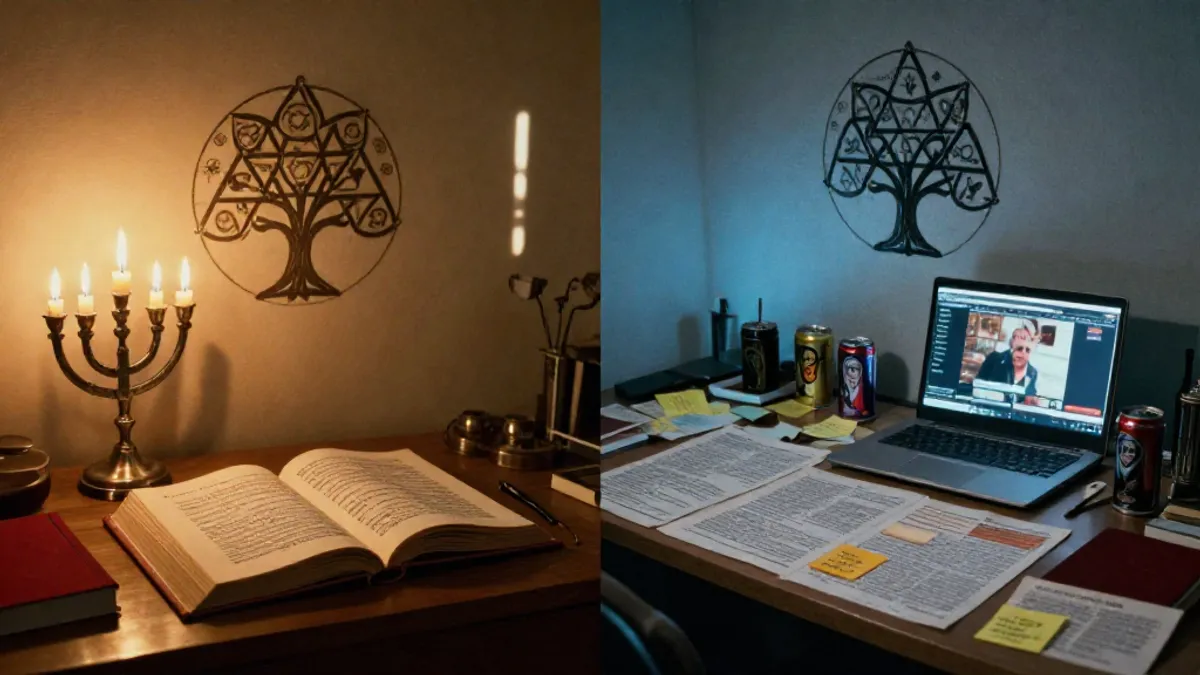
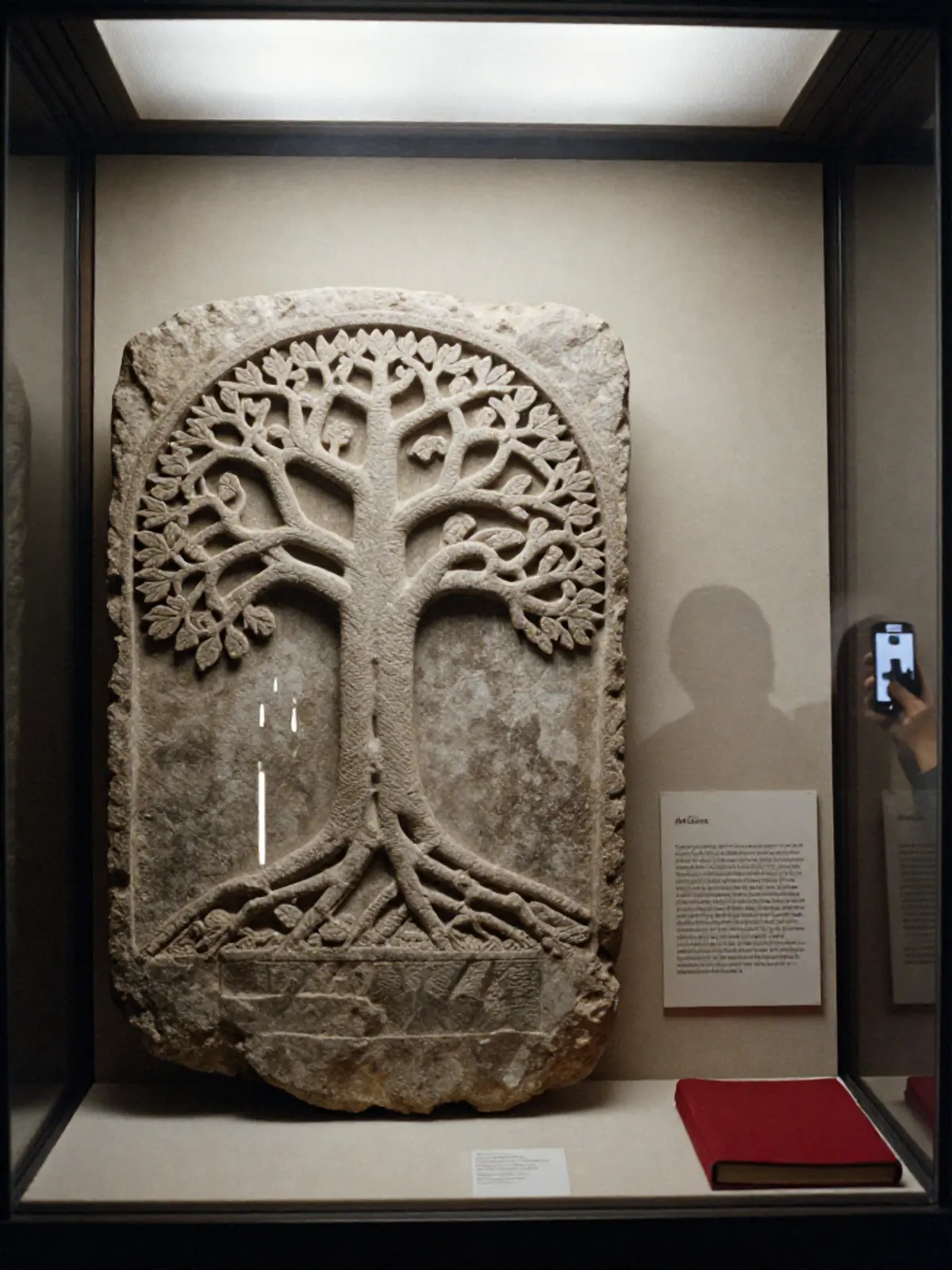
The Tree of Life is a Jewish mystical symbol. It was developed within Jewish contemplative theology. Its foundational theology appears in the Sefer Yetzirah and the Zohar, and its diagrammatic form was developed by later Kabbalists, texts written in Hebrew and Aramaic by Jewish scholars and mystics. As we explored in our second article, the Tree later took root in Christian and Hermetic soil, but its origins are Jewish, its foundational language is Jewish, and its deepest practitioners have always been Jewish.
This conspiracy map appropriates a Jewish sacred diagram to organize a narrative that is, at its core, antisemitic. The structure of Jewish contemplative theology - a map designed for the soul's encounter with the divine - is being used to frame a story about Jewish conspiracy and hidden control. The ten Sephirot, which a Kabbalist approaches with reverence and trembling, become containers for paranoia.
This is not merely intellectual dishonesty. It is a specific kind of violence against a tradition - the violence of taking a community's most sacred tool and turning it into a weapon aimed back at that community. It would be as if someone took the I-Ching's hexagrams and rearranged them into a diagram "proving" that Chinese civilization is a coordinated conspiracy against the West. The form would be recognizable. The content would be obscene.
Why Esoteric Symbols Are Vulnerable
Esoteric traditions are particularly susceptible to conspiratorial appropriation, and understanding why requires a structural observation.
Both esotericism and conspiracy thinking share a foundational claim: that hidden knowledge exists beneath the surface of ordinary reality. For a Kabbalist, this hidden knowledge is the divine structure of creation - the way the Infinite withdraws and emanates, the way light descends through the Sephirot. For a neidan practitioner, it is the subtle anatomy of the body, the circulation of qi through channels invisible to ordinary perception. For a conspiracy theorist, it is the secret structure of power - the way shadowy elites coordinate events behind the scenes.
The grammar is identical. Only the content differs.
This is why conspiracy theories so often borrow esoteric imagery: the all-seeing eye, the pyramid, the Tree of Life, sacred geometry, alchemical symbols. They parasitize the authority of genuine traditions. The esoteric symbol carries a charge - a sense that something real and important is being revealed - and conspiracy thinking redirects that charge toward its own purposes. The symbol's legitimate depth becomes camouflage for illegitimate claims.
There is a further vulnerability. Esoteric traditions are, by their nature, not widely understood. Most people have never studied Kabbalah. They do not know what the Sephirot are, what the pillars represent, or how the Tree functions as a contemplative tool. This ignorance creates a vacuum that conspiracy fills. When a viewer encounters the Tree of Life for the first time on a conspiracy map, they may assume that this is what the Tree is for - that it has always been a diagram of hidden power. The tradition is not only appropriated; it is redefined in the popular imagination.
This is why publications like AEON exist. The best defense against the misuse of sacred symbols is not to hide them - the internet has made that impossible - but to teach them. A reader who understands what Tiphereth actually means in Kabbalistic contemplation will not be seduced by a map that fills it with "Vatican." A reader who has sat with the interplay of Chesed and Gevurah, mercy and severity, will recognize immediately that the conspiracy map has stripped these concepts of everything that matters. Literacy is the antidote to appropriation.
Pattern Recognition vs. Pattern Projection
Throughout this series, we have engaged in comparative work. We have noted that the three pillars of the Tree of Life - Mercy, Severity, and Balance - share a structural resonance with the yin-yang polarity of Chinese cosmology. We have observed that Ein Sof's withdrawal and the Dao's emptying gesture toward a similar mystery. We have traced how deity correspondences travel across traditions through documented channels of cultural contact.
This kind of comparison is not conspiracy thinking. But it is important to articulate why.
Legitimate comparative scholarship says: "Inanna and Aphrodite share attributes because of documented cultural contact between Mesopotamia and Greece via Phoenician trade routes." It identifies specific mechanisms - trade, translation, migration, conquest - through which ideas travel between cultures. It acknowledges what is unknown. It holds its conclusions lightly. It is accountable to evidence.
Conspiracy thinking says: "Inanna and Aphrodite are the same because a secret cult has maintained continuous worship for six thousand years." It asserts hidden mechanisms. It treats the absence of evidence as proof of concealment. It holds its conclusions with absolute certainty. It is accountable to nothing.
The first is scholarship. The second is mythology dressed as revelation.
The difference is not in the act of finding patterns - both the scholar and the conspiracy theorist do this. The difference is in what happens next. The scholar tests the pattern against evidence, considers alternative explanations, and remains willing to be wrong. The conspiracy theorist treats the pattern as self-confirming and interprets every challenge as further proof of the conspiracy's power. Pattern recognition becomes pattern projection. The map is mistaken for the territory.
Consider a concrete example from this series. In earlier articles, we noted that Kabbalistic and Daoist cosmologies share certain structural features - the movement from formlessness to form, the interplay of complementary forces, the understanding that the material world is sustained by a hidden ground. We proposed that these resonances are worth contemplating, while being careful to note that they arise from independent traditions responding to similar existential questions, not from a secret channel of transmission. We acknowledged what we do not know. We did not claim that Rabbi Isaac Luria was reading the Daodejing, or that Laozi was a secret Kabbalist.
The conspiracy map does something very different. It takes every surface similarity - a shared symbol, a coincidence of dates, a name that sounds like another name - and treats it as evidence of coordination. Coincidence becomes proof. Ambiguity becomes confirmation. The map-maker does not ask, "Could there be another explanation?" The map-maker already knows the answer and is merely arranging the evidence to fit.
The Contemplative Alternative
Let us return, finally, to the Tree of Life as it was meant to be used.
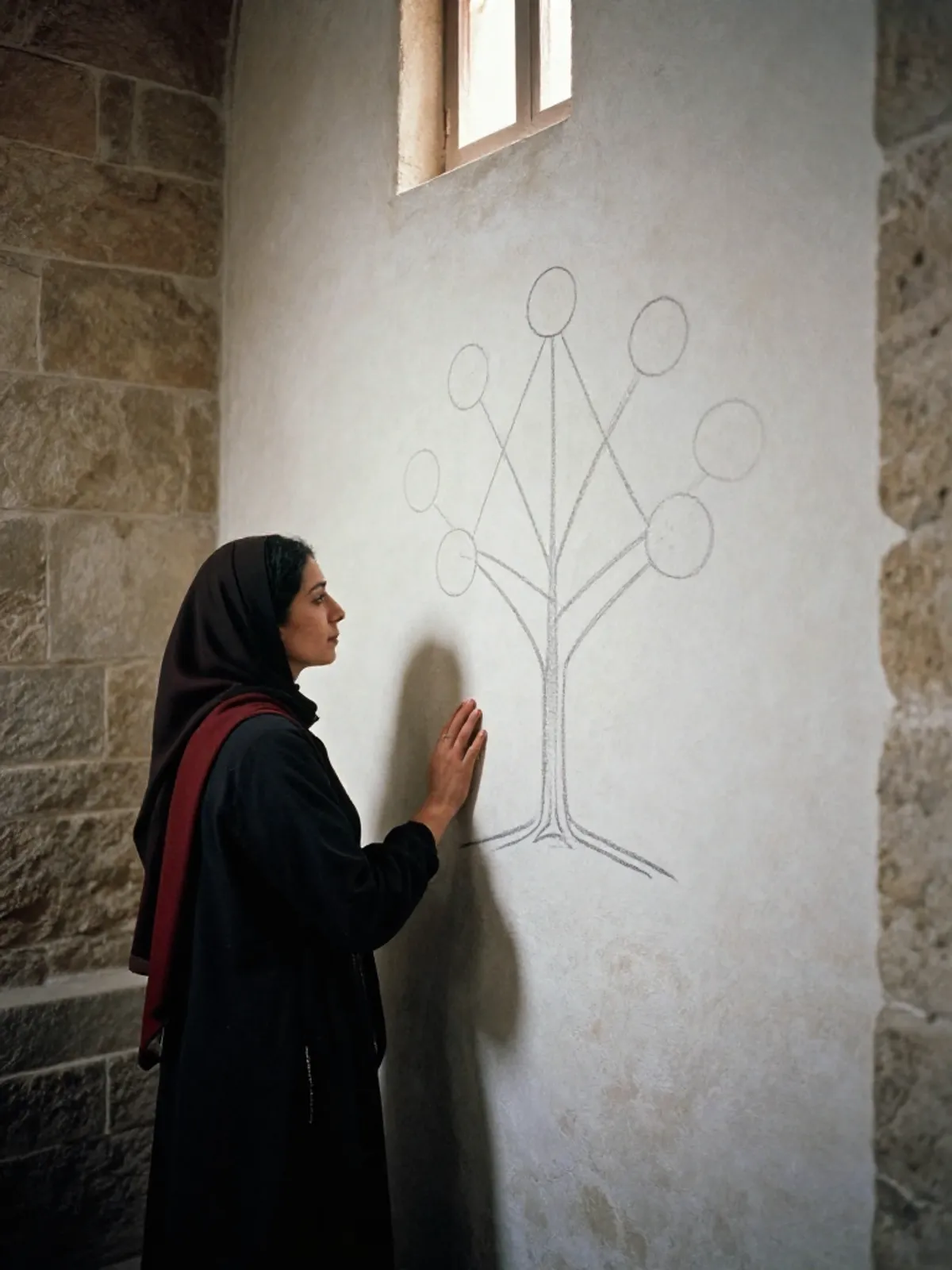
When a Kabbalist meditates on Tiphereth, they are not mapping Vatican power structures. They are contemplating Beauty - the harmony that holds Severity and Mercy in living balance, the place where the soul integrates its contradictions. When they sit with Malkuth, they are not thinking about the United States of America. They are attending to the presence of the divine in the material world - in the weight of the body, in the breath, in the grain of the wooden table under their hands.
The Tree is a tool for transformation, not information. It does not tell the practitioner who rules the world. It changes the practitioner - slowly, over years - by making visible the inner architecture of the soul. A Kabbalist who has spent decades with the Tree does not emerge with a theory of global power. They emerge with a deepened capacity for compassion, discernment, and presence. The Sephirot have done their work not by revealing secrets about the world, but by revealing the practitioner to themselves.
This is a point worth dwelling on, because it marks the deepest divergence between contemplative and conspiratorial uses of the same symbol. The conspiracy map promises mastery - if you can see the hidden structure, you have power over it, or at least the illusion of power. The contemplative map promises the opposite: surrender. To sit with the Tree is to discover how little you understand, how deep the mystery goes, how much of your own soul remains uncharted. The Kabbalist does not finish with the Tree. The Tree finishes with the Kabbalist.
The same is true of every genuine contemplative system. A practitioner of neidan does not master the dantian - they learn to listen to what the dantian are already doing. A student of the I-Ching does not decode the hexagrams - they learn to be decoded by them. The direction of knowledge is reversed. You do not extract information from the symbol. The symbol extracts truth from you.
This is the contemplative alternative to conspiracy: not a competing theory of who controls what, but an entirely different orientation toward knowledge itself. Contemplation asks: How must I change in order to see more clearly? Conspiracy asks: Who is hiding the truth from me? The first question opens the practitioner to transformation. The second locks them into a posture of permanent suspicion, which is its own kind of prison.
The Bridge Between Traditions
This series began with a map of becoming - the Tree of Life as it has been understood by Jewish, Christian, and Hermetic Kabbalists across centuries. We traced the three streams of transmission in our second article, explored the resonances between traditions, and examined how deity correspondences travel across cultures through documented historical channels. And now, in this final essay, we have arrived at the shadow side: the appropriation of sacred symbols by those who would flatten them into instruments of fear.
It was necessary to go here. A magazine devoted to cross-tradition esotericism cannot ignore the ways these traditions are misused. To do so would be to leave our readers vulnerable to the very distortions we are equipped to identify. If AEON teaches anything, it is that sacred symbols deserve both reverence and rigor - and that reverence without rigor is how symbols get stolen.
The Tree of Life and the sixty-four hexagrams of the I-Ching are both maps of how the formless becomes form. Neither tradition reduces to the other. A Kabbalist contemplating the descent from Ein Sof to Malkuth is not doing the same thing as a scholar of the I-Ching reading the movement from Wuji (無極) through Taiji (太極) to the ten thousand things. The languages differ. The practices differ. The communities and histories are distinct.
But a practitioner of either tradition will recognize something in the other's practice: the patient work of attending to patterns that are genuinely there, rather than projecting patterns that serve our anxieties. The willingness to sit with complexity rather than collapsing it into narrative. The understanding that the deepest knowledge transforms the knower, rather than merely informing them.
That is the difference between contemplation and conspiracy. One is a practice of attention. The other is a practice of suspicion. One opens the hand. The other clenches the fist.
The maps are real. The territory they describe is real. But only if we are willing to let them change us, rather than using them to confirm what we already fear. The Tree of Life will survive its appropriation - it has survived worse. But it will survive best in the hands of those who study it deeply enough to know what it is actually for.
This concludes the Kabbalah series in AEON's second volume. The Tree of Life remains where it has always been - not on a conspiracy board, not in a meme, but in the quiet space between the Infinite and the breath you are drawing right now. We began this series with ten spheres of light descending through three pillars. We end it with an invitation: learn the traditions before you let anyone weaponize them. The map is not the territory. But a good map, held with reverence, can teach you how to walk.