Another Map of the Territory
Every great contemplative tradition produces a map. Not a map of geography - a map of becoming.
In the pages of AEON, you have already encountered some of these maps. The I-Ching's sixty-four hexagrams chart every possible configuration of change. The three dantian of neidan trace the body's alchemical furnaces - essence below, energy at the center, spirit above. These are not abstractions. They are working diagrams for the soul's navigation of reality.
Now we cross a threshold. With this issue, AEON begins its exploration of the Western esoteric tradition, starting where it must - with the Kabbalistic Tree of Life, the Etz Chayyim (עץ החיים).
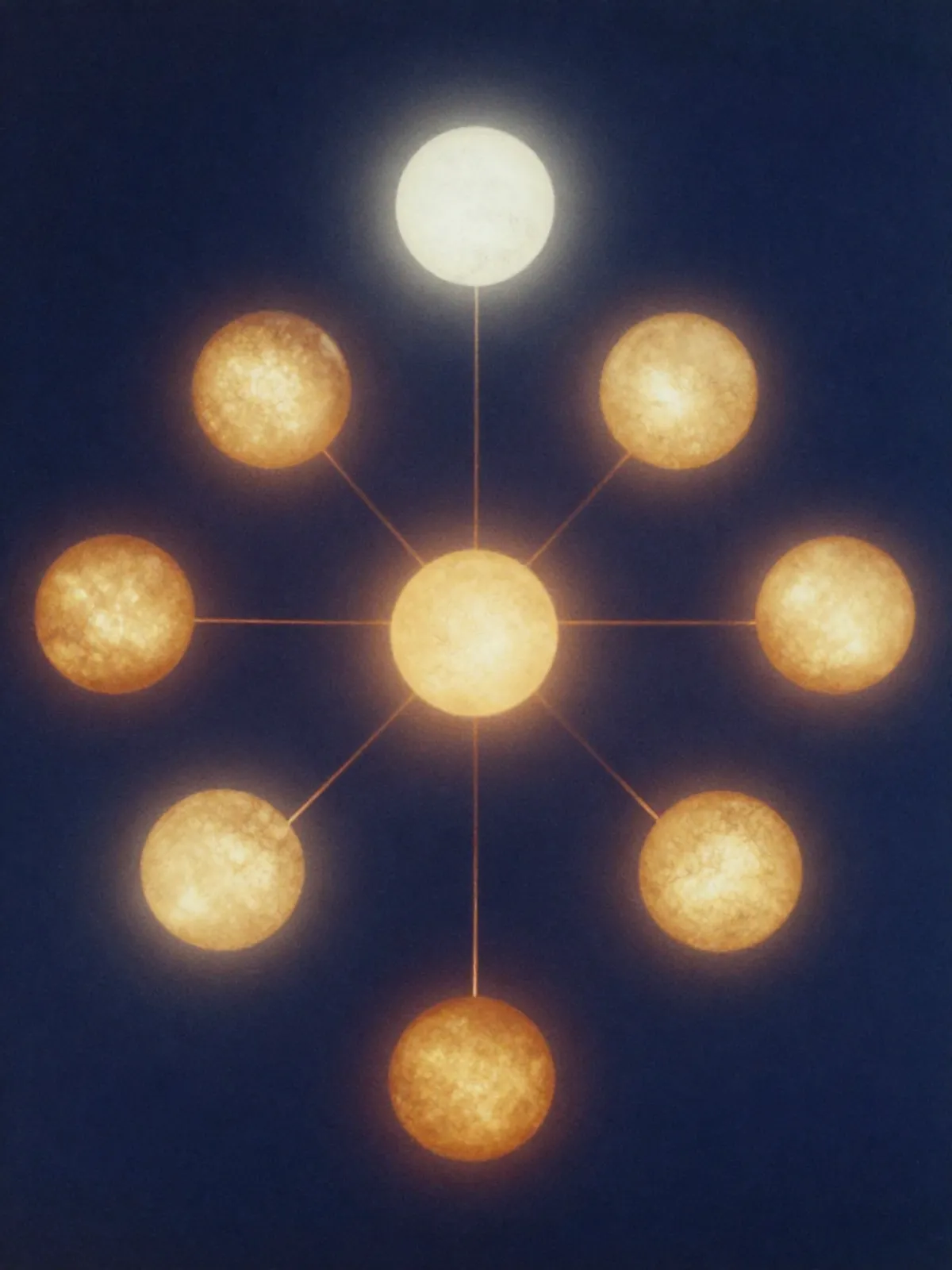
The Tree of Life is not a diagram to be memorized. It is a map of the relationship between the Infinite and the finite, between the unmanifest source of all things and the world you are sitting in right now, reading these words. Ten luminous centers of divine energy, called Sephirot (ספירות), are arranged on three pillars and connected by twenty-two paths. Together they describe how the One becomes the many - and how the many can find their way back.
If the I-Ching asks what is the quality of this moment?, the Tree of Life asks a different question: where does this moment stand in the great chain of emanation?
The Infinite and Its Withdrawal
Before the Tree, there is only Ein Sof (אין סוף) - the Infinite Without End. Ein Sof is not God in any personal sense. It is the boundless ground prior to all distinction, all form, all name. It cannot be described, only gestured toward.
אין סוף ברוך הוא, לית מחשבה תפיסא בך כלל.
Ein Sof, blessed be It - no thought can grasp You at all.
- Tikkunei Zohar
A question arises: if the Infinite is truly infinite, truly everywhere, how can anything else exist? Where is there room for a world?
The sixteenth-century Kabbalist Rabbi Isaac Luria offered a radical answer. He called it Tzimtzum (צמצום) - contraction, withdrawal. Before creation, Ein Sof contracted itself, withdrawing its infinite light to create a chalal (חלל), a hollow space, an emptiness within the fullness. Into this primordial void, a ray of divine light entered, and the process of emanation began.
This is not physics. It is contemplative theology - a way of sitting with the impossible paradox that the finite world exists within, and is sustained by, an infinite source that had to conceal itself for anything to appear at all. The Daoist reader will recognize something here: the Dao that empties itself so that the ten thousand things may arise. Laozi's wu (無) and Luria's chalal are not identical, but they rhyme.
The Ten Sephirot: Vessels of Light
The word Sephirah (ספירה, plural Sephirot) is related to the Hebrew root for "counting," "telling," and - by some interpretations - "sapphire," suggesting luminous radiance. The Sephirot are not things. They are modes of divine activity, stages in the unfolding of creation, and - read inward - layers of the human soul.
They are traditionally divided into three triads and a final, solitary sphere.
The Supernal Triad
The first three Sephirot stand above the Abyss, beyond ordinary comprehension. They are the most abstract, the closest to Ein Sof, the most difficult to speak about without distortion.
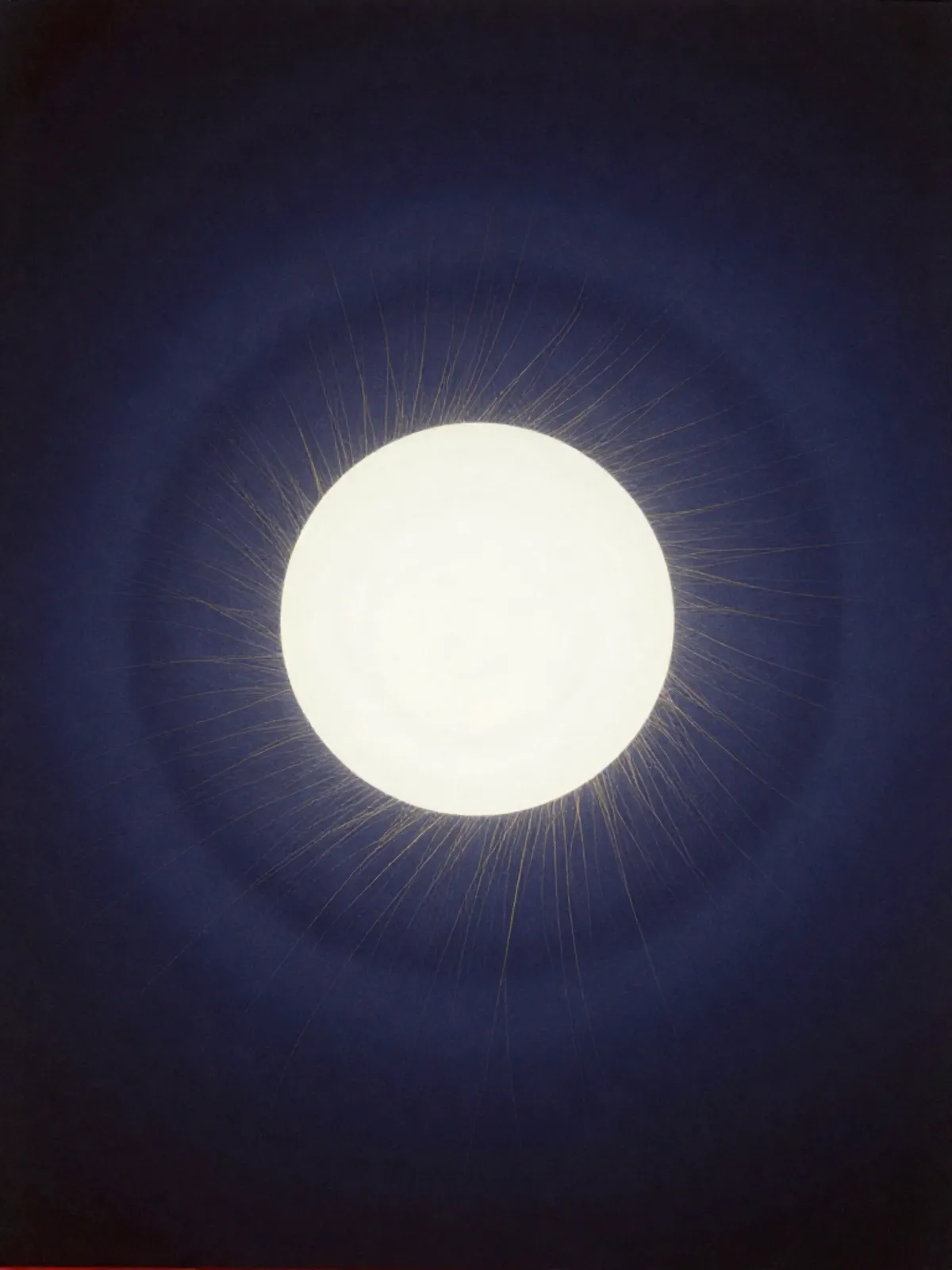
Kether (כתר), Crown. The first emanation, the initial point of light within the void. Kether is the will before it becomes a thought, the moment before the moment. It sits at the summit of the middle pillar. You cannot contemplate Kether directly any more than you can look at the sun. You can only know it by what flows from it.
Chokmah (חכמה), Wisdom. The first flash of undifferentiated knowing - pure creative force, the seed that contains the entire tree within it. Chokmah sits at the top of the right pillar. It is the father principle, the lightning bolt of insight before it takes shape. In the language of the I-Ching, it carries something of the pure yang force of Qian (乾).
Binah (בינה), Understanding. Where Chokmah is the flash, Binah is the vessel that receives it. Understanding here means the capacity to differentiate, to give form, to hold. Binah sits at the top of the left pillar. She is called the Supernal Mother, the great sea into which the river of Wisdom pours. Without Binah, Chokmah would be lightning with no ground.
Between the Supernal Triad and the six Sephirot below it lies the Abyss - a gap in the Tree where knowledge cannot cross unchanged. The contemplative who passes through the Abyss does not return the same.
The Ethical Triad
Below the Abyss, the light of the Supernals takes on moral and relational qualities. These are the Sephirot of character, the architecture of the soul's ethical life.
Chesed (חסד), Lovingkindness or Mercy. The expansive, generous outpouring of divine grace. Chesed sits on the right pillar, directly below Chokmah. It is the impulse to give without limit, to overflow. Unchecked, it would dissolve all boundaries.
Gevurah (גבורה), Severity or Strength. The power of restraint, judgment, and necessary limitation. Gevurah sits on the left pillar, below Binah. It is not cruelty - it is the force that says enough, that shapes raw generosity into something the world can hold. A blade is not violent. It is precise.
Tiphereth (תפארת), Beauty or Harmony. The heart of the Tree. Tiphereth sits at the center of the middle pillar, balancing Chesed and Gevurah, mediating between the heights of Kether and the depths of Malkuth. It is the Self in its most integrated form - not perfection, but wholeness. Many contemplative traditions place the seat of the soul here.
The Astral Triad
The lower triad governs the more instinctual, embodied dimensions of the soul - the forces that shape our daily experience before we become conscious of them.
Netzach (נצח), Victory or Eternity. The drive, the desire, the creative passion that pushes life forward. Netzach sits on the right pillar. It is the force behind art, eros, and the stubborn will to endure. It does not reason. It burns.
Hod (הוד), Splendor or Glory. The intellectual counterpart to Netzach's fire - communication, analysis, form, language. Hod sits on the left pillar. It is the force behind ritual, learning, and the precise articulation of meaning. Where Netzach is the dancer, Hod is the choreography.
Yesod (יסוד), Foundation. The channel through which all the upper Sephirot pour their influence into the manifest world. Yesod sits on the middle pillar, just above the final sphere. It is associated with the unconscious, with dreams, with the generative power of imagination. Everything passes through Yesod before it becomes real.
The Kingdom
Malkuth (מלכות), Kingdom. The tenth and final Sephirah. The world of matter, body, earth, and presence. Malkuth sits at the base of the middle pillar. She is called the Bride, the Daughter, the Shekhinah (שכינה) - the indwelling presence of the divine within creation.
Malkuth is not a lesser sphere. It is the destination. All the light of Ein Sof, descending through nine stages of emanation, arrives here - in your hands, in this breath, in the weight of your body on the chair. The Kabbalist does not seek to escape Malkuth. The Kabbalist seeks to recognize that Malkuth is already full of the light it seems to lack.
Da'at: The Sephirah That Is Not There
Between the Supernal Triad and the Ethical Triad, some Kabbalists place an eleventh sphere - or rather, a non-sphere. Da'at (דעת), Knowledge, occupies the position where the Abyss yawns. It is not counted among the ten Sephirot. It is the point where understanding becomes experience, where the knower and the known collapse into each other.
Da'at is sometimes called the hidden Sephirah. It appears on some versions of the Tree and not others. When it appears, it sits on the middle pillar between Chokmah and Binah, directly above Tiphereth - in the place where, logically, there should be something, and where, experientially, there is a gap.
The gap matters. In contemplative practice, Da'at corresponds to the moment when intellectual understanding of a truth becomes embodied knowing - the difference between reading about the taste of salt and tasting it. The Abyss is not empty. It is the threshold where everything you think you know has to be surrendered so that genuine knowing can arise. The neidan tradition has a parallel in the concept of lianshen huanxu (煉神還虛) - refining spirit back to emptiness. In both systems, the deepest transformation requires a passage through unknowing.
This is why the Tree has ten Sephirot and not eleven. Da'at is not a destination. It is a doorway you can only pass through by letting go of the need to arrive.
The Shekhinah in Exile
One of Kabbalah's most powerful and poignant images concerns the tenth Sephirah, Malkuth, and the feminine presence that dwells there.
The Shekhinah (שכינה) is the indwelling presence of the divine in the material world. In early rabbinic literature, the Shekhinah is the aspect of God that descends to be with the people of Israel - in the Temple, in the wilderness, in exile. The Kabbalists took this concept and wove it into the Tree. The Shekhinah became identified with Malkuth herself - the Bride, the Daughter, the Queen.
But in Lurianic Kabbalah, a tragedy has occurred. When the vessels of the Sephirot shattered during the act of creation - an event called Shevirat ha-Kelim (שבירת הכלים), the Breaking of the Vessels - sparks of divine light fell into the material world and became trapped in kelipot (קליפות), shells of impurity. The Shekhinah, dwelling in Malkuth, was separated from her consort Tiphereth and from the rest of the divine structure above. She is in exile.
בגלותא דשכינתא, כלא בגלותא.
When the Shekhinah is in exile, everything is in exile.
- Zohar
This is not abstract theology. For the Kabbalist, every act of prayer, every mitzvah, every moment of conscious attention to the divine spark within the material world is an act of tikkun (תיקון) - repair, restoration, the reunification of the Shekhinah with the Holy One. The practitioner's task is not to escape the material world but to redeem it - to find the light hidden in every shell, every broken vessel, every moment of apparent darkness.
The reader familiar with the Chinese traditions explored in earlier issues of AEON will recognize something here. The Daodejing's mysterious feminine (xuanpin, 玄牝) is the generative source of all things, dwelling at the root. The Shekhinah is the divine feminine presence, dwelling at the base of the Tree, in the world of matter. Both traditions locate the feminine at the ground of embodied reality. And both insist that this grounding is not a fall but a mission.
The Three Pillars
The ten Sephirot are arranged on three vertical pillars, and this arrangement is not decorative. It is the deep structure of the Tree.
The right pillar - the Pillar of Mercy (Chesed) - holds Chokmah, Chesed, and Netzach. It is expansive, flowing, generative. It gives.
The left pillar - the Pillar of Severity (Din) - holds Binah, Gevurah, and Hod. It is contractive, shaping, defining. It forms.
The middle pillar - the Pillar of Balance (Rahamin) - holds Kether, Tiphereth, Yesod, and Malkuth. It is the axis of integration, the path of equilibrium between excess and restraint.
The interplay between the pillars will feel familiar to readers of this magazine. The right pillar expands; the left pillar contracts. One gives form; the other gives force. The middle pillar holds the tension between them. This is not identical to the yin-yang polarity of Chinese cosmology, but the structural resonance is genuine. Both systems recognize that reality arises from the dynamic interplay of complementary forces - and that wisdom lies not in choosing one side, but in finding the living center.
The Twenty-Two Paths
The Sephirot are the stations. The paths between them are the journeys.
Twenty-two paths connect the ten Sephirot to one another, and each path is associated with one of the twenty-two letters of the Hebrew alphabet. This correspondence is ancient, rooted in the Sefer Yetzirah (ספר יצירה), the Book of Formation - one of the oldest Kabbalistic texts, likely composed between the second and sixth centuries CE.
עשר ספירות בלימה ועשרים ושתים אותיות יסוד.
Ten Sephirot of Nothingness and twenty-two foundation letters.
- Sefer Yetzirah 1:2
The Sefer Yetzirah teaches that God created the universe through the Hebrew letters - that language itself is the medium of creation. Each letter is a force, a vibration, a mode of becoming. When a path on the Tree is assigned a letter, it means that the journey between those two Sephirot partakes of that letter's quality.
The paths are not merely connective tissue. They are the terrain the contemplative must cross. Later Kabbalists and Hermeticists mapped additional correspondences onto the paths - the Major Arcana of the Tarot, astrological signs, elements - but the foundation remains the Hebrew alphabet and the understanding that language, consciousness, and creation are inseparable.
The Tree as Practice
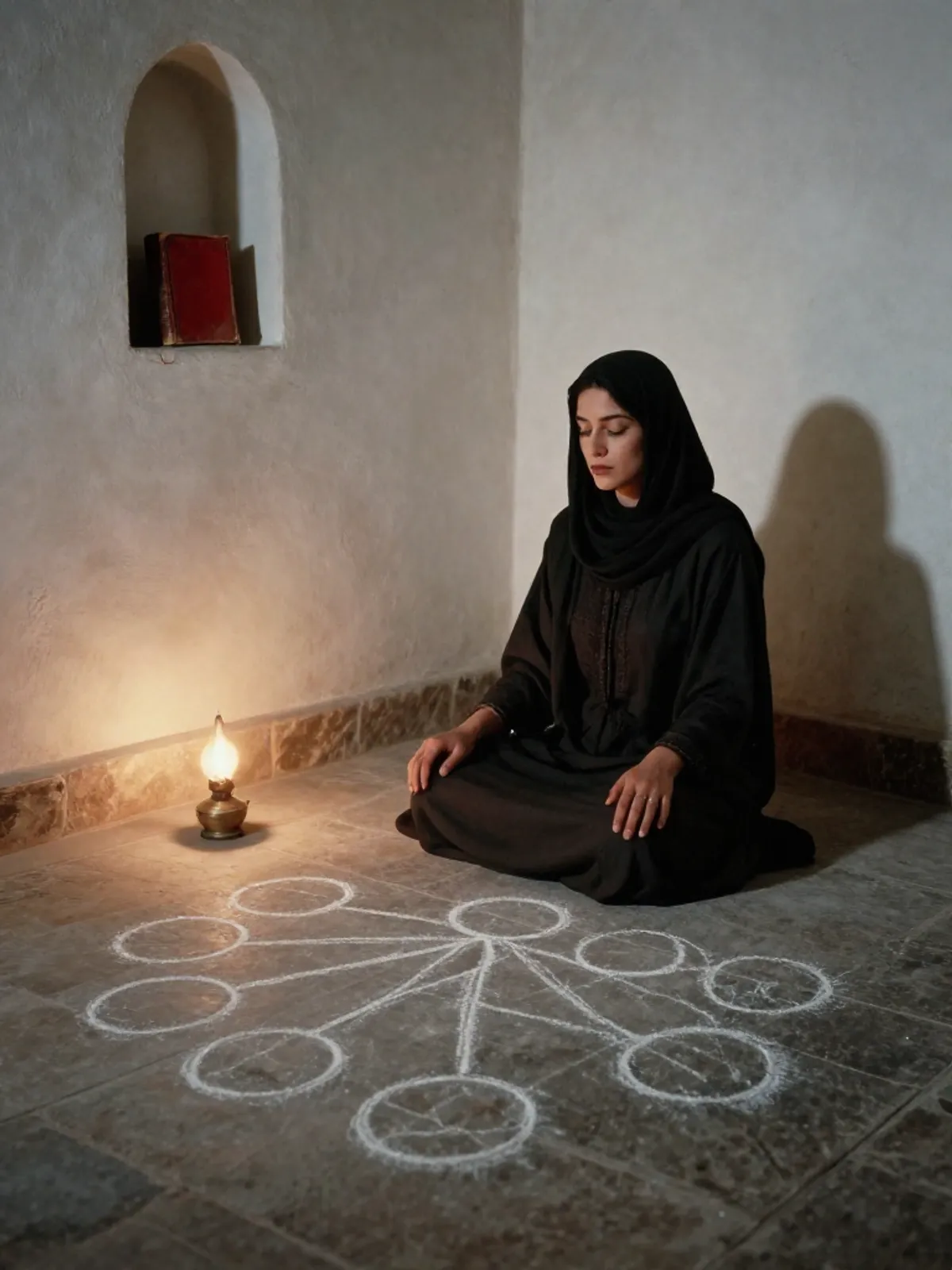
All of this would be merely interesting if the Tree of Life were only a philosophical diagram. It is not. It is a tool for inner work.
Kabbalistic contemplatives engage the Tree in several ways:
Meditation on individual Sephirot. The practitioner sits with a single Sephirah - its name, its qualities, its position - and allows it to become a mirror. To meditate on Gevurah, for instance, is to confront every place in your life where you lack necessary boundaries, or where you have been too harsh. The Sephirah reveals your relationship to the force it represents.
Hitbonenut (התבוננות), contemplative meditation. In the Hasidic tradition especially, practitioners engage in deep, sustained contemplation of divine attributes. This is not visualization in the Western magical sense - it is closer to the Daoist practice of guanxiang (觀想), contemplative visualization, allowing the reality of a spiritual truth to saturate awareness.
Pathworking. The contemplative imaginatively traverses a specific path between two Sephirot, encountering the qualities of that path - its letter, its imagery, its challenges - as a form of inner pilgrimage. This practice was developed extensively in later Hermetic and magical Kabbalah, but its roots lie in the earlier tradition of merkavah (מרכבה) mysticism, the visionary ascent through celestial palaces.
Prayer and liturgy. Traditional Jewish Kabbalists align the daily prayers with specific Sephirot, turning each blessing into an act of conscious connection with a different level of divine emanation. The morning liturgy ascends the Tree; the evening liturgy descends.
The Tree of Life is not a system you master. It is a system that reveals you to yourself - slowly, over years. Like the I-Ching, it does not give you answers. It gives you a more luminous set of questions.
A Living Tradition
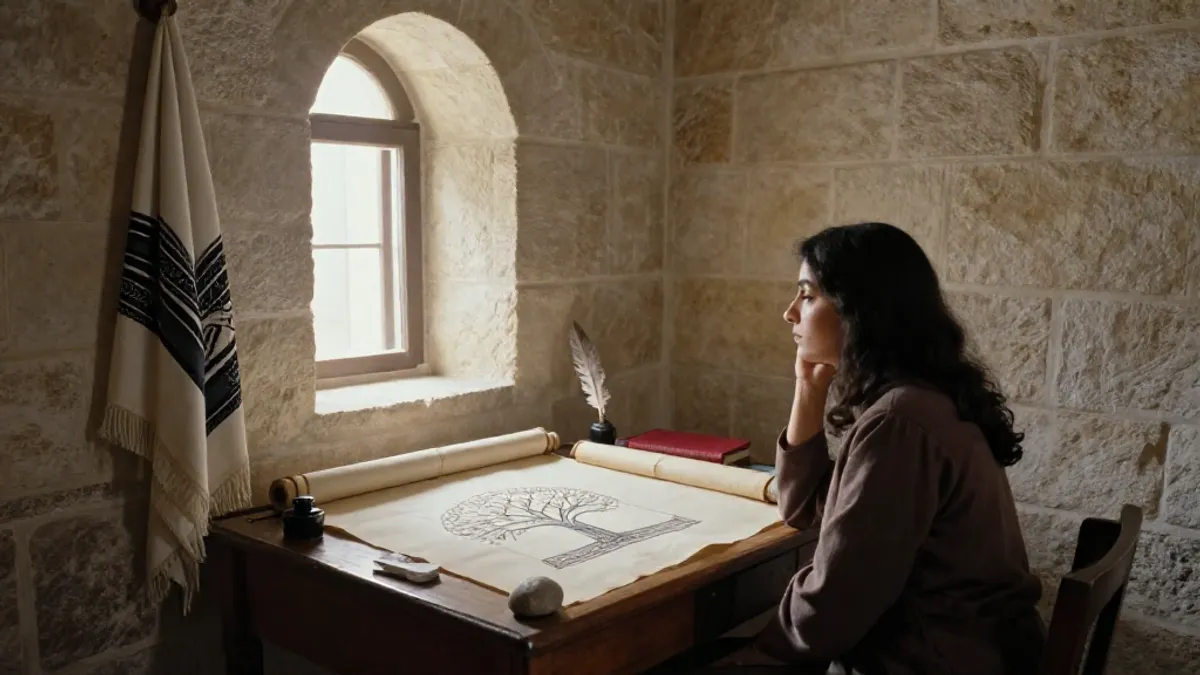
The Tree of Life has been drawn and redrawn for centuries - by Jewish mystics in Safed, by Christian Kabbalists in Renaissance Florence, by Hermetic magicians in Victorian London, by contemplatives in quiet rooms everywhere. It has proven resilient, not because it is fixed, but because it is alive. Each generation finds in it what it needs.
In the articles that follow, we will explore the Tree in depth - its three great streams of transmission, its relationship to practice, and its surprising resonances with the Chinese traditions we have already been exploring in these pages. The map is vast. We have only placed our finger on the first point of light.
Next in this series: "Three Kabbalot" - the Jewish, Christian, and Hermetic streams of Kabbalistic transmission, and how one mystical diagram became three living traditions.