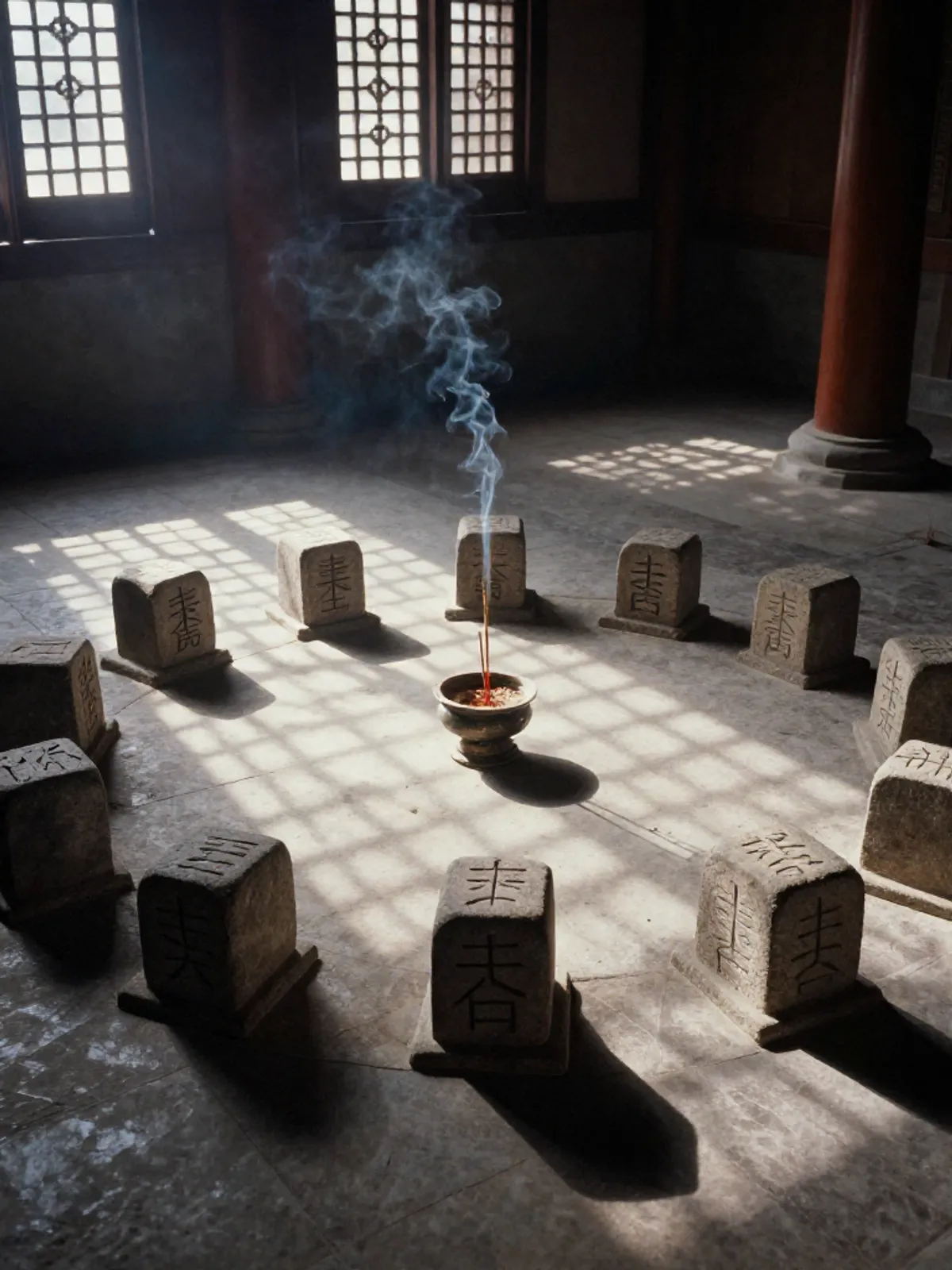
Where Time Becomes Texture
The companion article on the Celestial Stems introduced the twelve Earthly Branches in a table -- their animals, their phases, their months. That was a map. Now we enter the territory.
The ten Heavenly Stems are heaven's signature: abstract, principled, describing the quality of a force. The twelve Earthly Branches (地支, dìzhī) are where that force enters matter and time. They are the hours of the day, the months of the year, the seasons of a life. If the stems tell you what an element is, the branches tell you when it breathes, where it lives, and how long it lasts.
This distinction matters. A stem is a single note. A branch is a chord -- containing hidden elements, carrying a season's momentum, participating in complex alliances and antagonisms with other branches. The branch system is where Chinese metaphysics becomes truly dynamic: not a static portrait of birth, but a moving picture of time itself, with you inside it.
夫易者,象也;爻者,效也。聖人所以仰觀俯察,象天地日月星辰,草木萬物。順之則和,逆之則亂。
The Yi is images; the lines are emulation. The sage looked up and down to observe -- imaging heaven and earth, sun and moon, stars, grasses, trees, and all things. Follow them and there is harmony; go against them and there is chaos.
- Jingfang Yizhuan, 1st century BCE
The branches are the structure of that following. They teach you the rhythm you are already inside.
The Twelve Hours: A Day as Energetic Landscape
Before the branches were animals, they were hours. Each of the twelve branches governs a two-hour period of the day, and these are not neutral time-slots. Each carries a distinct quality of energy, a particular relationship between yin and yang.
| Branch | Animal | Hours | Phase | Energetic Quality | |--------|--------|-------|-------|-------------------| | 子 zǐ | Rat | 23:00--01:00 | Water | Yin at its extreme; yang is born | | 丑 chǒu | Ox | 01:00--03:00 | Earth | Yang stirs beneath stillness | | 寅 yín | Tiger | 03:00--05:00 | Wood | First breath of the new day | | 卯 mǎo | Rabbit | 05:00--07:00 | Wood | Yang emerges; the gate opens | | 辰 chén | Dragon | 07:00--09:00 | Earth | Morning consolidation | | 巳 sì | Snake | 09:00--11:00 | Fire | Yang ascends with force | | 午 wǔ | Horse | 11:00--13:00 | Fire | Yang at its peak; yin is born | | 未 wèi | Goat | 13:00--15:00 | Earth | Yin gathers beneath the heat | | 申 shēn | Monkey | 15:00--17:00 | Metal | Descent begins; cutting clarity | | 酉 yǒu | Rooster | 17:00--19:00 | Metal | Yin deepens; gathering inward | | 戌 xū | Dog | 19:00--21:00 | Earth | Evening consolidation | | 亥 hài | Pig | 21:00--23:00 | Water | Yin descends toward completion |
Notice the architecture. The day begins at 子 (zǐ), the Rat hour, not at midnight by Western convention but at 23:00 -- because this is the moment when yin, having reached its fullest depth, generates the first spark of yang. This is the principle of yáng shēng yú zǐ (陽生於子): yang is born within the extreme of yin. The day does not begin with light. It begins with the turning.
By 卯 (mǎo), the Rabbit hour (05:00--07:00), yang has emerged above the horizon. The character 卯 itself originally depicted a gate being thrown open. At 午 (wǔ), the Horse hour, yang crests and yin begins its return -- the mirror of the midnight turning. By 酉 (yǒu), the Rooster hour, the world gathers inward again, metal contracting, light withdrawing.
The four earth branches -- 丑 (chǒu), 辰 (chén), 未 (wèi), 戌 (xū) -- stand at the transitions between seasons, serving as buffers. They are the pauses between movements, the held breath before the next phrase. Earth does not have its own season in the branch system. It is the transition itself.
In traditional Chinese medicine, each two-hour period corresponds to the peak activity of a specific organ meridian. The body does not run at a constant hum. It pulses -- liver qi surging at the Tiger hour (03:00--05:00), heart fire at its height during the Horse hour, kidney water deepening at the Rooster hour. If you wake consistently at 3 AM, the tradition does not call this insomnia. It calls it a message from the liver.
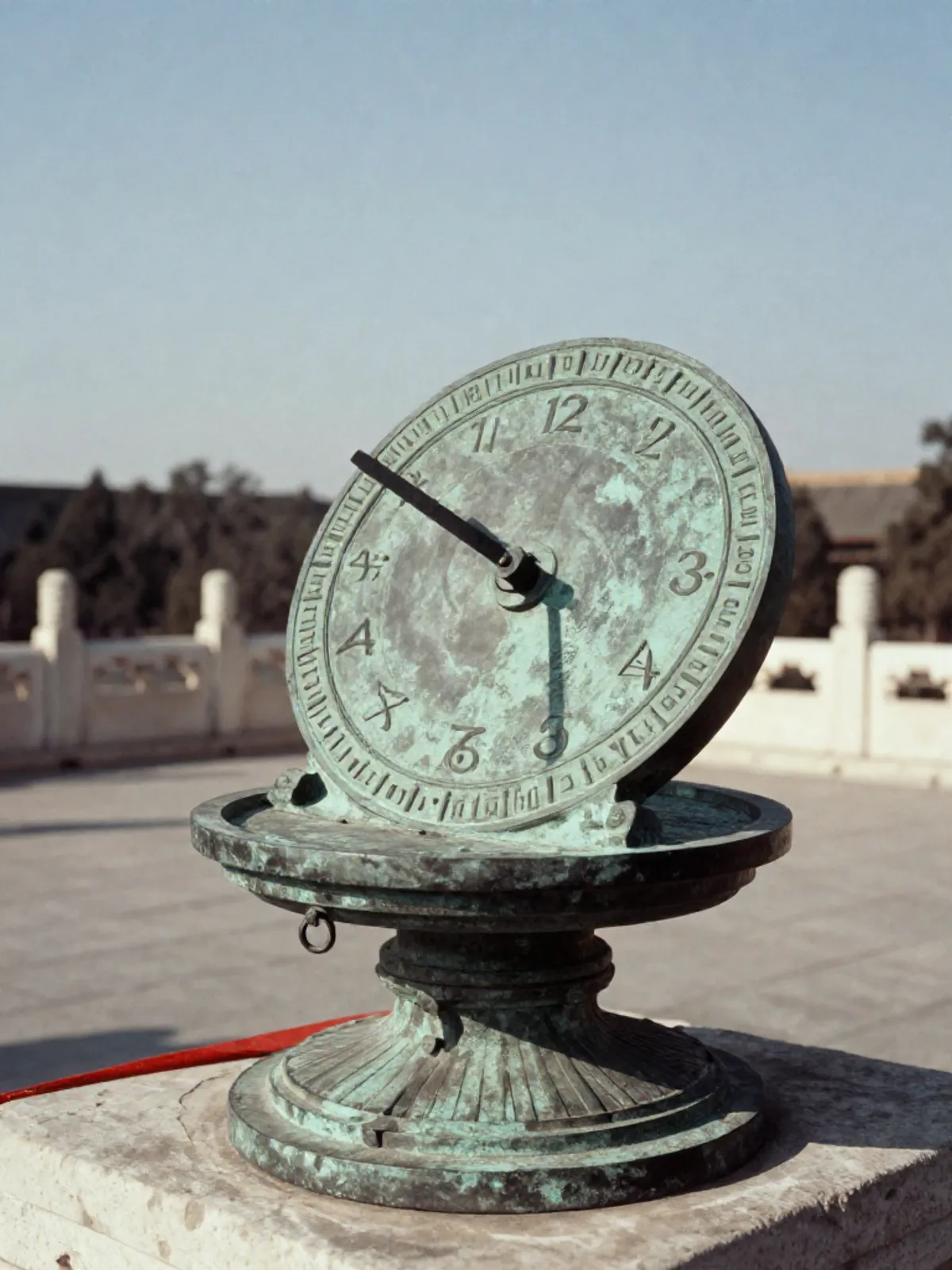
What Lives Inside a Branch: The Hidden Stems
The surface element of a branch -- wood for 寅 (yín), fire for 午 (wǔ), water for 子 (zǐ) -- tells you the weather. But branches are not simple. Each one contains Hidden Stems (藏干, cánggān), internal elemental forces concealed within, like roots beneath a tree. The main hidden stem is the zhèngqì (正氣), the "correct qi" -- the dominant force. Secondary stems are the zhōngqì (中氣), the "middle qi," and the yúqì (餘氣), the "residual qi" -- traces of adjacent seasonal energies.
The earliest systematic account of hidden stems appears in the Jingfang Yizhuan (京房易傳) of the first century BCE:
寅中有生火,亥中有生木,巳中有生金,申中有生水。丑中有死金,戌中有死火,未中有死木,辰中有死水,土兼於中。
Within 寅 there is nascent Fire; within 亥 there is nascent Wood; within 巳 there is nascent Metal; within 申 there is nascent Water. Within 丑 there is dead Metal; within 戌 there is dead Fire; within 未 there is dead Wood; within 辰 there is dead Water. Earth is blended throughout.
- Jingfang Yizhuan
This passage reveals the logic. The "nascent" elements are those being born within a branch -- fire kindling inside the wood of 寅, just as spring carries the seed of summer. The "dead" elements are those entombed -- metal interred within the earth of 丑, the remnant of autumn preserved in winter's ground. And earth, the element of transition, is present in every earth branch as a binding force.
The full table of hidden stems:
| Branch | Main Stem (正氣) | Secondary (中氣) | Residual (餘氣) | |--------|-----------------|-----------------|----------------| | 子 zǐ | 癸 Water | -- | -- | | 丑 chǒu | 己 Earth | 辛 Metal | 癸 Water | | 寅 yín | 甲 Wood | 丙 Fire | 戊 Earth | | 卯 mǎo | 乙 Wood | -- | -- | | 辰 chén | 戊 Earth | 癸 Water | 乙 Wood | | 巳 sì | 丙 Fire | 庚 Metal | 戊 Earth | | 午 wǔ | 丁 Fire | 己 Earth | -- | | 未 wèi | 己 Earth | 乙 Wood | 丁 Fire | | 申 shēn | 庚 Metal | 壬 Water | 戊 Earth | | 酉 yǒu | 辛 Metal | -- | -- | | 戌 xū | 戊 Earth | 丁 Fire | 辛 Metal | | 亥 hài | 壬 Water | 甲 Wood | -- |
Three branches are "pure" -- containing only a single stem. 子 (zǐ) holds only 癸 water, 卯 (mǎo) only 乙 wood, 酉 (yǒu) only 辛 metal. These are undivided forces, concentrated and unmixed. The earth branches, by contrast, are the most complex, each containing three stems, because earth by nature absorbs and stores the residues of the phases that precede and follow it.
Consider 寅 (yín), the Tiger. Its main qi is 甲 (jiǎ, yang wood) -- the great tree, the force of spring. But within it, 丙 (bǐng, yang fire) is already kindling -- summer announced before spring has fully arrived. And 戊 (wù, yang earth) provides the ground, the residual stability from the preceding earth branch 丑. The Tiger is not merely wood. It is a landscape: forest floor, first warmth, the soil that holds the roots. When you encounter 寅 in a chart, you are reading all three layers at once.
The Life Cycle of an Element
Each of the Five Phases passes through a twelve-stage life cycle as it moves through the twelve branches. This is the Twelve-Stage Cycle (長生掌訣, zhǎngshēng zhǎngjué), sometimes called the cycle of growth and decline. It is, arguably, the deepest structural insight of the branch system: every element is born, grows, peaks, weakens, dies, is buried, vanishes, and is conceived again -- endlessly.
The twelve stages:
| Stage | Chinese | Meaning | |-------|---------|---------| | Birth | 長生 zhǎngshēng | The element comes into being | | Bathing | 沐浴 mùyù | Fragile first contact with the world | | Capping | 冠帶 guāndài | Assuming form, gaining recognition | | Approaching Office | 臨官 línguān | Entering one's power, taking up responsibility | | Imperial Prosperity | 帝旺 dìwàng | Peak strength, full expression | | Decline | 衰 shuāi | The first loosening, still capable but waning | | Illness | 病 bìng | Vitality compromised, vulnerability | | Death | 死 sǐ | The element ceases active function | | Tomb | 墓 mù | Stored, interred, preserved but inaccessible | | Extinction | 絕 jué | Complete dissolution, no trace remains | | Embryo | 胎 tāi | New conception within the void | | Nurturing | 養 yǎng | Gestation, gathering toward birth |
Each element begins its cycle at a different branch:
| Phase | Birth (長生) | Peak (帝旺) | Tomb (墓) | |-------|------------|-----------|---------| | Wood | 亥 hài | 卯 mǎo | 未 wèi | | Fire | 寅 yín | 午 wǔ | 戌 xū | | Metal | 巳 sì | 酉 yǒu | 丑 chǒu | | Water | 申 shēn | 子 zǐ | 辰 chén |
Wood is born at 亥 (hài) -- in late autumn, in the Pig hour, in the depths of water. This seems paradoxical until you understand the logic: water nourishes wood. The element is born in the house of its mother. Fire is born at 寅 (yín), in wood -- because wood feeds fire. Metal is born at 巳 (sì), in fire -- because fire forges metal from ore. Water is born at 申 (shēn), in metal -- because metal, in the old understanding, generates water through condensation on its surface.
Each element peaks at its own pure branch: wood at 卯, fire at 午, metal at 酉, water at 子. And each is entombed in an earth branch: wood in 未, fire in 戌, metal in 丑, water in 辰. The earth branches serve as graves and granaries -- storing what has died, preserving its essence until the cycle turns again.
This is not mechanical. It is a meditation on impermanence structured as cosmology. Every force that reaches its zenith is already declining. Every force that reaches extinction is already conceiving its return. The system does not moralize about this. It simply describes the shape of time.
Three Harmonies, Six Combinations, Six Clashes
The branches do not sit in isolation. They form relationships -- alliances that amplify, pairings that transform, collisions that break.
Three Harmonies (三合, sānhé)
The Three Harmonies are triads that connect the Birth, Peak, and Tomb of each element's life cycle. They are the most powerful combinations in the branch system, because they gather the full arc of an element's existence into a single alliance.
| Triad | Branches | Element Produced | |-------|----------|-----------------| | Water Frame | 申 shēn + 子 zǐ + 辰 chén | Water | | Wood Frame | 亥 hài + 卯 mǎo + 未 wèi | Wood | | Fire Frame | 寅 yín + 午 wǔ + 戌 xū | Fire | | Metal Frame | 巳 sì + 酉 yǒu + 丑 chǒu | Metal |
When all three branches of a harmony appear in a chart -- or are assembled across the natal chart and a Luck Pillar -- the resulting elemental force is formidable. A Water Frame (申子辰) is not merely three separate branches adding water. It is the entire biography of water -- birth, flourishing, entombment -- gathered into a single force. The element produced by a complete Three Harmony overrides the individual surface elements of the participating branches.
Even two of the three branches can form a "half-combination," leaning toward the full element but not yet consolidated. Which two matters: the pair containing the Peak branch (子 for water, 卯 for wood, 午 for fire, 酉 for metal) is the stronger half.
Six Combinations (六合, liùhé)
The Six Combinations are pairings of branches that attract and, under the right conditions, transform into a new element.
| Pair | Resulting Phase | |------|-----------------| | 子 zǐ + 丑 chǒu | Earth | | 寅 yín + 亥 hài | Wood | | 卯 mǎo + 戌 xū | Fire | | 辰 chén + 酉 yǒu | Metal | | 巳 sì + 申 shēn | Water | | 午 wǔ + 未 wèi | Fire and Earth (no clean transformation) |
Combinations are gentler than Harmonies. They suggest attraction, cooperation, a willingness to merge. In chart analysis, when two branches in a Six Combination sit adjacent -- particularly within the same pillar or in neighboring pillars -- they may "forget" their original elements and take on the nature of the transformed phase. A 寅 (yín, wood) meeting 亥 (hài, water) does not clash; the two fold into each other and produce wood. Water feeds wood, and wood grows eagerly in water's house.
The final pair, 午 (wǔ) and 未 (wèi), is the exception. Classical sources debate whether they truly transform at all. Fire and earth are already neighbors; the combination generates warmth and stability but lacks the alchemical drama of the other five pairings.
Six Clashes (六衝, liùchōng)
The Six Clashes are direct oppositions -- branches that face each other across the twelve-branch circle, separated by six positions.
| Clash Pair | |-----------| | 子 zǐ ↔ 午 wǔ | | 丑 chǒu ↔ 未 wèi | | 寅 yín ↔ 申 shēn | | 卯 mǎo ↔ 酉 yǒu | | 辰 chén ↔ 戌 xū | | 巳 sì ↔ 亥 hài |
遇王則吉,廢則凶,沖則破,刑則敗,死則危,生則榮。
When an element encounters its flourishing, there is fortune; when discarded, misfortune; when clashed, it breaks; when punished, it fails; when dead, peril; when born, it flourishes.
- Jingfang Yizhuan
A clash does not always mean disaster. The 子午 (zǐ-wǔ) clash -- water against fire -- is the most intense, a direct confrontation of the day's two poles. But a clash can also mean release: if a branch is trapping a useful hidden stem, a clash may "break open" that branch and liberate the element inside. In a stagnant chart, a well-timed clash from a Luck Pillar or annual branch can be exactly what is needed -- the earthquake that clears the rubble.
The character of each clash depends on the elements involved, the relative strength of the branches, and the condition of their hidden stems. Mechanical interpretation fails here. Context is everything.
The Naying: Poetry of the Elements
There is a layer of the stem-branch system that reads less like cosmology and more like verse. The Naying (納音, nàyīn), sometimes translated as "received sounds" or "harmonic elements," assigns each of the sixty stem-branch pairs a poetic element-image -- a vivid, often surprising metaphor that grounds abstract phase theory in the textures of the world.
The sixty pairs, taken two at a time, yield thirty Naying images. Here is a selection:
甲子 jiǎzǐ / 乙丑 yǐchǒu: 海中金 -- "Gold in the Sea." Precious metal submerged, invisible, waiting. Potential that has not yet surfaced, treasure that requires depth to reach.
丙寅 bǐngyín / 丁卯 dīngmǎo: 爐中火 -- "Fire in the Furnace." Domestic transformation, the controlled heat that turns raw material into something useful. Not wildfire but craft.
戊辰 wùchén / 己巳 jǐsì: 大林木 -- "Wood of the Great Forest." Vast, ancient, self-sustaining. A force that does not need permission to grow, rooted so deeply it answers only to itself.
庚午 gēngwǔ / 辛未 xīnwèi: 路旁土 -- "Earth by the Roadside." Humble, exposed, trodden upon -- but also foundational, present everywhere, the ground that makes all journeys possible.
壬申 rénshēn / 癸酉 guǐyǒu: 劍鋒金 -- "Gold of the Sword's Edge." Metal refined to its sharpest expression, brilliant and dangerous, capable of cutting through what nothing else can.
丙午 bǐngwǔ / 丁未 dīngwèi: 天河水 -- "Water of the Celestial River." The Milky Way itself -- water that does not flow downward but spans the sky, the most ethereal expression of the water phase.
庚戌 gēngxū / 辛亥 xīnhài: 釵釧金 -- "Gold of Hairpins and Bracelets." Ornamental metal, beautiful but delicate. Refinement that comes at the cost of structural strength.
壬戌 rénxū / 癸亥 guǐhài: 大海水 -- "Water of the Great Ocean." The final Naying in the sixty-year cycle -- water at its most vast, its most encompassing, containing everything and resisting nothing.
The Naying system does not replace orthodox Five Phase analysis. It supplements it with a layer of qualitative nuance. Two people may both have a wood Day Master, but "Wood of the Great Forest" and "Wood of the Willow" (楊柳木, yángliǔ mù) are radically different in character. The forest is immovable and self-sufficient; the willow bends, weeps, and thrives near water. The Naying gives the practitioner -- and the person -- a felt image to hold, a way of recognizing one's element not as an abstraction but as a particular expression of matter in the world.
The Five Phases in Season
Elements are not equally strong at all times. The doctrine of Seasonal Strength (旺相休囚絕, wàng xiāng xiū qiú jué) describes how each phase waxes and wanes through the year.
| Status | Chinese | Meaning | |--------|---------|---------| | Flourishing | 旺 wàng | At full strength, dominant | | Supporting | 相 xiāng | Being generated, rising | | Resting | 休 xiū | Having generated, withdrawing | | Imprisoned | 囚 qiú | Being controlled, suppressed | | Extinct | 絕 jué | Cut off from support, powerless |
Applied to the four seasons:
| Season | Flourishing | Supporting | Resting | Imprisoned | Extinct | |--------|-------------|-----------|---------|------------|---------| | Spring | Wood | Fire | Water | Metal | Earth | | Summer | Fire | Earth | Wood | Water | Metal | | Autumn | Metal | Water | Earth | Fire | Wood | | Winter | Water | Wood | Metal | Earth | Fire |
In spring, wood flourishes -- it is the reigning force. Fire is "supporting" because wood generates fire; fire is rising on wood's momentum. Water is "resting" -- it has done its work (nourishing wood) and withdraws. Metal is "imprisoned" -- controlled by the season's dominant wood, unable to act. Earth is "extinct" -- cut off from its source of support, at its weakest.
This is not merely theoretical. A metal Day Master born in spring is "imprisoned" -- structurally disadvantaged, needing support from other chart elements to function. The same metal Day Master born in autumn is flourishing, backed by the season's full momentum. The classical counsel is direct: know the season of your birth, and you know the first and most fundamental condition of your Day Master's strength.
此天地之數也,非吉凶所從生也。
These are the patterns of Heaven and Earth, not the origin of fortune and misfortune.
- Xieji Bianfang Shu
This line encodes a sophisticated philosophical position. The system of seasonal strength describes cosmic rhythms, not moral verdicts. Being "imprisoned" in a given season is not a curse. It is a condition -- one that can be addressed, balanced, even turned to advantage. The system reveals the field of forces you are working within. What you do within that field remains your own.
Luck Pillars: Riding the Decades
The companion article on the Celestial Stems introduced Luck Pillars (大運, dàyùn) as ten-year periods that shift the elemental landscape of a life. Here, we go deeper.
Luck Pillars are derived from the Month Pillar -- the pillar that encodes the season of your birth and is considered the most powerful single influence on a chart's elemental balance. From that starting point, the system counts forward or backward through the sexagenary cycle, generating a sequence of stem-branch pairs that will govern successive decades of your life.
The direction of the count depends on a precise rule: yang year stem + male, or yin year stem + female, counts forward. The reverse -- yin year stem + male, yang year stem + female -- counts backward. The yang stems are 甲, 丙, 戊, 庚, 壬; the yin stems are 乙, 丁, 己, 辛, 癸. A man born in a 甲 (jiǎ) year progresses forward. A woman born in the same year progresses backward.
The onset age of the first Luck Pillar is calculated from the number of days between the birth date and the next (or previous) seasonal node (jiéqì, 節氣), divided by three and rounded. This means two people born days apart may enter their first Luck Pillar at different ages. The system is ruthlessly specific.
Each Luck Pillar introduces a new stem and a new branch into the chart's active environment. The stem governs the first five years of the decade; the branch governs the second five. When a water branch arrives in a chart dominated by fire, the effect is not subtle. The fires may be quenched, or they may produce steam -- transformation, turbulence, sudden change in a life that had seemed settled.
Within each Luck Pillar, Annual Pillars (流年, liúnián) provide the finest grain of temporal analysis. The year 2026, for instance, is 丙午 (bǐngwǔ) -- yang fire over the Horse, itself a fire branch. For a person whose chart needs warmth, this is a year of vitality and breakthrough. For a person already burning, it demands caution and retreat. The annual pillar interacts with both the natal chart and the current Luck Pillar, creating a three-layered field of forces.
The classical saying captures the principle:
運到則發 -- yùn dào zé fā -- "When the right luck arrives, one blossoms."
The corollary is equally true: when the wrong luck arrives, one endures. The system does not promise that every decade will be favorable. It promises that every decade has a structure, and that structure can be understood.
正五行乃五行之質,雙山五行乃五行之氣。
The Orthodox Five Elements are the substance of the Five Elements; the Paired-Mountain Five Elements are the energy of the Five Elements.
- Xieji Bianfang Shu
This distinction between substance and energy is essential. Your natal chart is substance -- the fixed endowment, the constitutional pattern. The Luck Pillars are energy -- the dynamic current flowing through that pattern. A chart with excellent substance but poor current energy may feel like talent without opportunity. A chart with modest substance riding a favorable current may accomplish more than its birth would suggest. The art of life, in this framework, is the negotiation between what you are given and what arrives.
The Six Spirits: Elements in Animal Form
At the intersection of divination and daily practice, the tradition assigns five (sometimes six) symbolic animals to the five phases, each condensing an element's characteristic energy into a vivid, immediately graspable form. These are the Six Spirits (六獸, liùshòu), sometimes called the Six Animals.
Azure Dragon (青龍, qīnglóng) -- Wood. Joy, celebration, good news, noble assistance. When the Azure Dragon appears in a divination, something is growing, opening, beginning. It is the spirit of spring in symbolic form.
Vermillion Bird (朱雀, zhūquè) -- Fire. Documents, speech, disputes, official communications. Fire illuminates but also exposes. The Vermillion Bird governs the realm of words -- their power to clarify and their power to burn.
Hook Array (勾陳, gōuchén) -- Earth. Land, property, delay, stagnation. Earth holds and stabilizes but can also trap. The Hook Array suggests matters that are stuck, entangled, requiring patience rather than force.
Flying Serpent (螣蛇, téngshé) -- Fire (secondary). Strange events, dreams, deception, the uncanny. Where the Vermillion Bird is fire in its social aspect, the Flying Serpent is fire in its mysterious aspect -- visions, illusions, things not quite as they appear.
White Tiger (白虎, báihǔ) -- Metal. Severity, illness, violence, authority, roads and travel. Metal cuts, and the White Tiger is the spirit of that cutting -- surgical, impersonal, sometimes necessary, always requiring respect.
Dark Warrior (玄武, xuánwǔ) -- Water. Theft, secrecy, hidden matters, romance, the unknown. Water flows into unseen places. The Dark Warrior presides over what is concealed -- including desires and fears that have not yet surfaced into consciousness.
The Six Spirits are not used in standard bazi analysis. They belong to the older divination traditions of the Yijing and the Liuren (六壬) system. But they illuminate how the Five Phases were experienced -- not as theoretical categories but as felt presences, each with a temperament, a mode of action, a face.
The Branches and the Body
The twelve branches do not merely map time. They map the body -- and they map the body as time.
In Chinese medicine, the twelve primary meridians (十二正經, shí'èr zhèngjīng) each have a two-hour period of peak activity that corresponds to a branch. The organ clock is not a metaphor. It is a clinical framework, used for over two thousand years, that governs the timing of acupuncture treatments, herbal prescriptions, and the daily rhythm of self-cultivation.
| Branch | Hours | Meridian | Organ | |--------|-------|----------|-------| | 寅 yín | 03:00--05:00 | Lung | 肺 fèi | | 卯 mǎo | 05:00--07:00 | Large Intestine | 大腸 dàcháng | | 辰 chén | 07:00--09:00 | Stomach | 胃 wèi | | 巳 sì | 09:00--11:00 | Spleen | 脾 pí | | 午 wǔ | 11:00--13:00 | Heart | 心 xīn | | 未 wèi | 13:00--15:00 | Small Intestine | 小腸 xiǎocháng | | 申 shēn | 15:00--17:00 | Bladder | 膀胱 pángguāng | | 酉 yǒu | 17:00--19:00 | Kidney | 腎 shèn | | 戌 xū | 19:00--21:00 | Pericardium | 心包 xīnbāo | | 亥 hài | 21:00--23:00 | Triple Burner | 三焦 sānjiāo | | 子 zǐ | 23:00--01:00 | Gallbladder | 膽 dǎn | | 丑 chǒu | 01:00--03:00 | Liver | 肝 gān |
The sequence is not arbitrary. It follows the flow of qì through the body, beginning with the lungs (寅, the first stirring of the day's breath) and ending with the liver (丑, the organ of storage and planning, active in the deep stillness before dawn). The liver governs the smooth flow of qi throughout the body and does its most important work while you sleep -- which is why the tradition insists that sleep before 丑 (01:00) is more restorative than sleep after. This is not folk wisdom dressed in medical language. It is a structural claim: the body's relationship to time is not incidental. You are built out of the same twelve-phase cycle that governs the year and the sixty-year round.
When a practitioner reads a bazi chart alongside a patient's symptoms, the branches in the chart point to constitutional tendencies. A chart heavy in 午 (wǔ, fire) and deficient in 子 (zǐ, water) suggests a person whose heart fire may flare while kidney water runs thin -- insomnia, palpitations, anxiety above and exhaustion below. The branches of the Luck Pillar and annual pillar indicate when these tendencies are most likely to manifest. This is medicine and cosmology speaking the same language.
The Rhythm You Are Moving In
The Earthly Branches teach something that the modern world has largely forgotten: time is not empty. It is not a neutral container through which events happen to pass. Every hour has a quality. Every season exerts a pressure. Every decade carries a configuration of forces that you can learn to read, even if you cannot control them.
The system does not predict your future. It reveals the rhythm you are already moving in -- the tides that were set in motion at your birth, the currents that shift with each Luck Pillar, the daily pulse of energy through your body's own twelve-station cycle. To know this rhythm is not to be imprisoned by it. It is to stop fighting the current you did not know was there.
The branches ask you to take time seriously -- not as something to manage or optimize, but as something to inhabit. You are born at a particular hour of a particular day in a particular season of a particular year, and each of those moments carries a specific weight. This is not destiny in the fatalistic sense. It is the recognition that you are made of the same stuff as the seasons, subject to the same cycles, and capable -- if you attend closely enough -- of moving with them instead of against them.
The Celestial Stems gave you the elements in their pure form. The Earthly Branches give you those elements in time -- growing, peaking, declining, dying, and returning. This is the fuller picture: not a portrait but a biography, not a snapshot but a film. The twelve branches turn, the hidden stems stir within them, the life cycle rolls forward, and somewhere in that motion, your own particular pattern is playing itself out -- not determined but shaped, not fixed but rhythmic, and always, at every point, open to the question of how you will meet what arrives.